
Why Elvis Presley Was Finally Laid to Rest at Graceland
On August 17, 1977—just one day after Elvis Presley’s death—the world was still struggling to process the impossible reality that the King of Rock ’n’ Roll was gone. Radios played his songs in stunned repetition, fans gathered in silence, and headlines searched for words that could explain how someone so alive could suddenly disappear. While the public mourned from a distance, the Presley family faced a far more intimate and painful task: bringing Elvis home one last time.
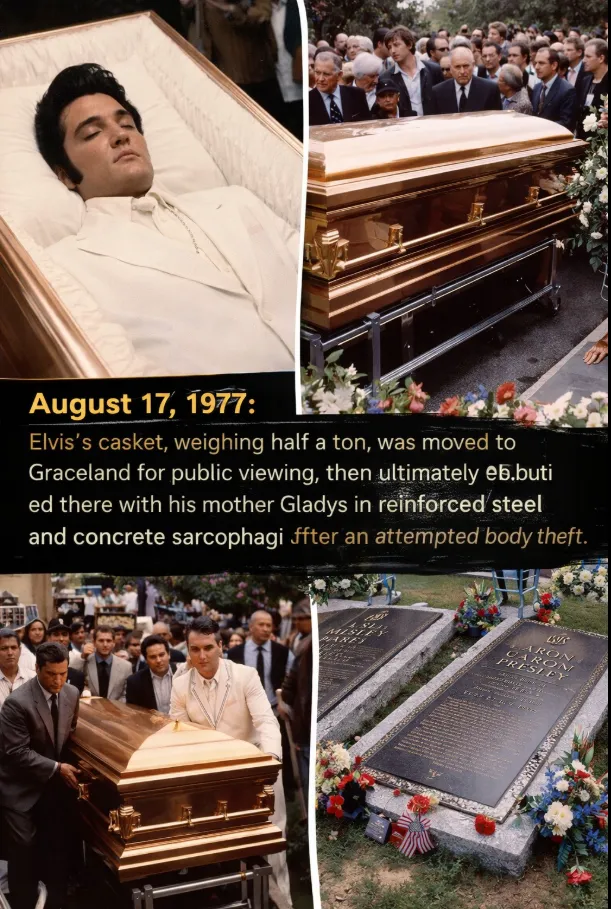
That day, Elvis Presley’s casket was moved to Graceland. The decision was deliberate and deeply personal. Before the gates were opened to thousands of grieving fans, the family needed privacy—time to say goodbye away from cameras, crowds, and the relentless weight of his fame. Graceland, the place that had been Elvis’s refuge for nearly two decades, became a sanctuary of grief.
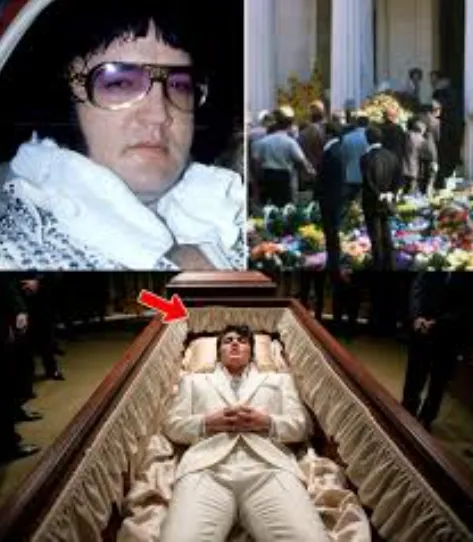
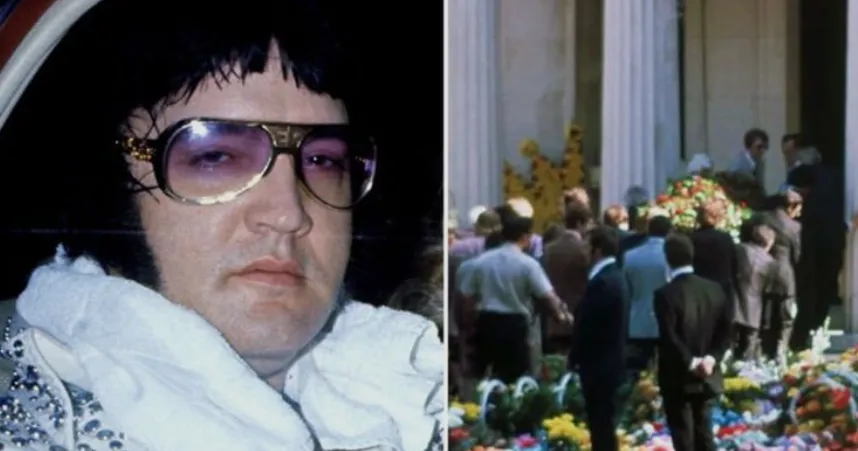
Those who saw Elvis in his coffin later remarked on something unexpected. He appeared unusually young. His face was calm, almost gentle, as if time had briefly reversed itself. The strain that had marked his final years—the exhaustion, the pressure, the physical toll of fame—seemed to have softened. This was the result of embalming, yet for many family members and close friends, the sight carried a deeper meaning. It was as though Elvis had been granted a final moment of peace, free from the burdens that had followed him throughout his life.
The casket itself was striking in both design and symbolism. Constructed of copper and bronze, it was massive—so heavy that, with Elvis inside, it weighed nearly half a ton. The sheer weight made moving it a solemn, physical effort, one that mirrored the emotional gravity of the moment. Even in death, Elvis Presley carried an extraordinary presence. The casket seemed less like a container and more like a monument, reflecting the scale of the man the world had lost.
After the funeral services, Elvis was laid to rest in a private crypt at Forest Hill Cemetery. On the surface, it appeared to be a dignified and secure resting place. But Elvis Presley was not an ordinary man, even in death. His fame had reached a level where devotion could easily blur into obsession. And it did not take long for that reality to make itself known.
Shortly after the burial, the Presley family learned of an attempted plot to steal Elvis’s body. Though the attempt failed, the mere existence of such a plan sent shockwaves through the family. The idea that someone would try to disturb his remains was horrifying—not only because of the violation itself, but because it suggested that Elvis could never truly escape the dangers that fame had brought him.
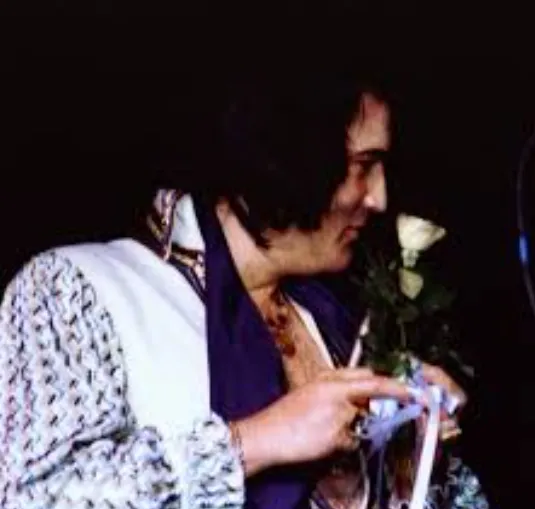
For the family, this was the breaking point. Elvis had given his life to the public. He had sacrificed privacy, normalcy, and ultimately his health. To imagine him being exploited even after death was unbearable.
It fell to Vernon Presley, Elvis’s father, to make a decision no parent should ever have to consider. Quietly but firmly, Vernon chose to move his son. Forest Hill Cemetery, no matter how respectable, was no longer safe. The only place where Elvis could be truly protected was Graceland—the home where he had laughed, loved, and sought shelter from the world.
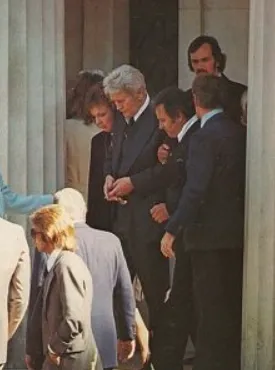
Vernon also decided that Elvis should not rest alone. His beloved mother, Gladys Presley, who had died in 1958 and remained the most influential figure in his life, would be moved as well. The bond between Elvis and Gladys had shaped him profoundly, and reuniting them in death felt both natural and necessary.
Their coffins were transferred to Graceland and placed in reinforced steel-and-concrete sarcophagi, designed to be permanent and nearly impenetrable. This was not an act of excess or spectacle. It was an act of protection—one final promise from a family determined to keep Elvis safe at last.
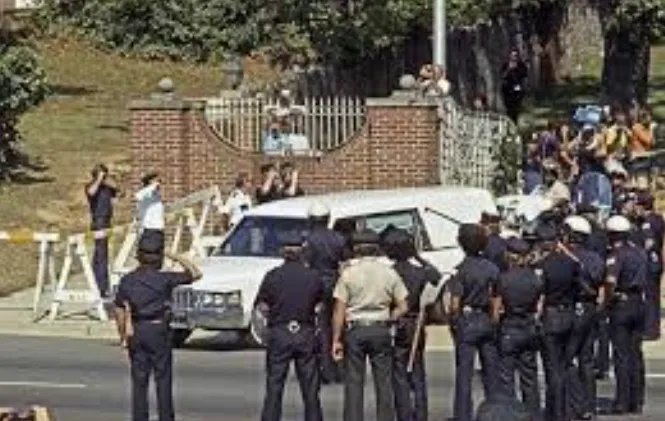
The permanent entombment of Elvis Presley at Graceland transformed the estate into something far greater than a historic home. It became sacred ground. The gardens where he rests are not just a memorial, but a statement: here lies a man who belonged to the world, yet finally belongs only to peace.
There is a quiet irony in this ending. Throughout his life, Elvis struggled to find a place where he could simply exist without expectation. Fame followed him everywhere, demanding more songs, more appearances, more of himself. Graceland was the one place where the King could be just a man. In death, it became the only place where he could truly rest.

Today, millions of visitors walk the grounds of Graceland each year. They stand silently before the meditation garden, many unaware of the fear and heartbreak that led to Elvis’s final resting place being there. What they feel, however, is unmistakable. There is a sense of stillness, of closure—a feeling that this is exactly where he was meant to be.
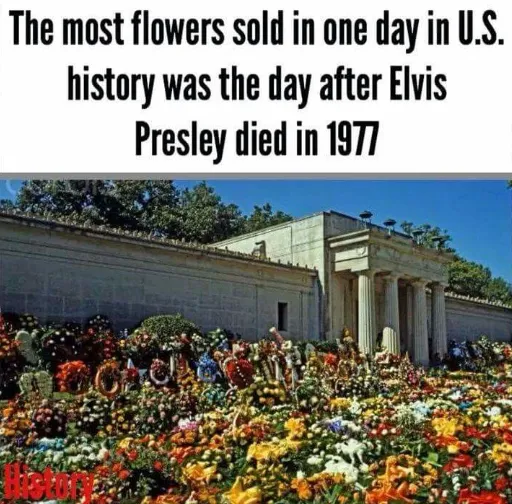
Elvis Presley’s journey did not end on a stage or beneath a spotlight. It ended at home. Surrounded not by applause, but by quiet remembrance. Protected not by bodyguards, but by love. After a lifetime spent carrying the weight of a legend, Elvis finally found something he had searched for all along: rest, safety, and peace.
Elvis’ Gentle Moments: When Kathy Westmoreland Harmonized with the Legend
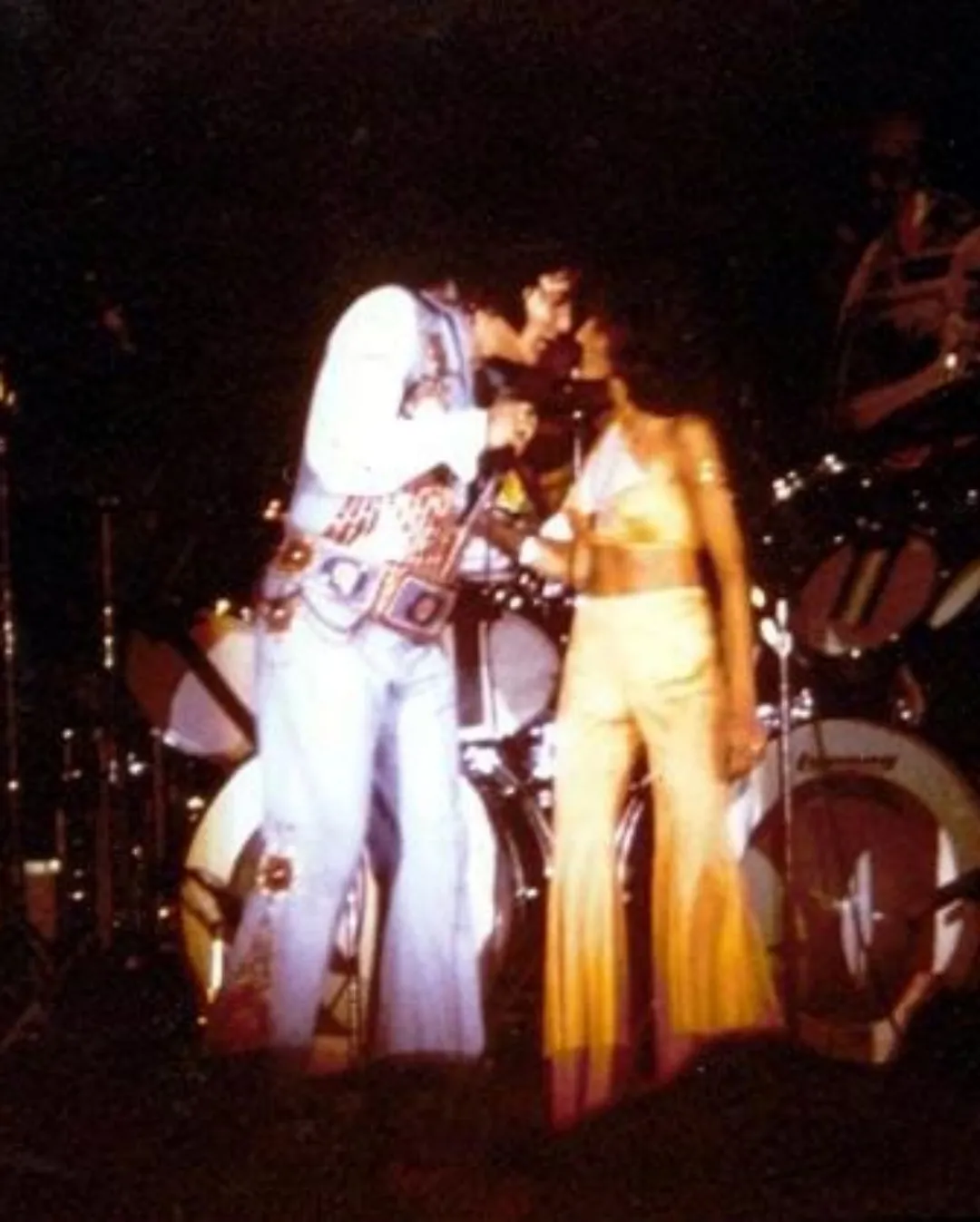
Elvis Presley sang with countless gifted artists throughout his extraordinary career, yet few shared a bond as quietly special, as gentle, and as deeply genuine as the one he had with Kathy Westmoreland. The angel-voiced soprano stood a few steps behind him on stage, often blending her voice into the soaring melodies that accompanied his iconic performances, but the place she held in his life went far beyond the spotlight.
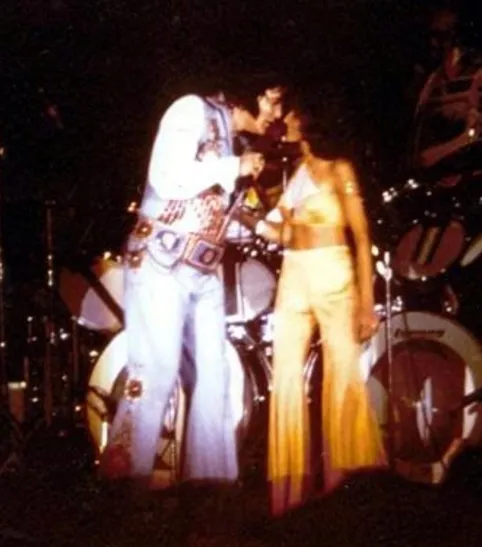
Kathy joined Elvis in the early 1970s, a period when he was transitioning into some of the most memorable years of his touring life. Her voice, soft and soaring, floated above his like a beam of light, cutting through the roar of the crowd with elegance and subtle power. From the first night she stepped on stage with him, the connection was immediate. Elvis, with his trademark grin and that effortless charm, would often introduce her to the audience:
“This is the little girl with the beautiful high voice.”
Every time he said it, Kathy felt a mixture of shyness, pride, and deep gratitude. In Elvis’s world, a universe brimming with fame, endless crowds, and constant demands, words were not thrown lightly. When he complimented someone, he meant it. And with Kathy, those words were a daily reassurance that her presence mattered—not just to the music, but to him personally.
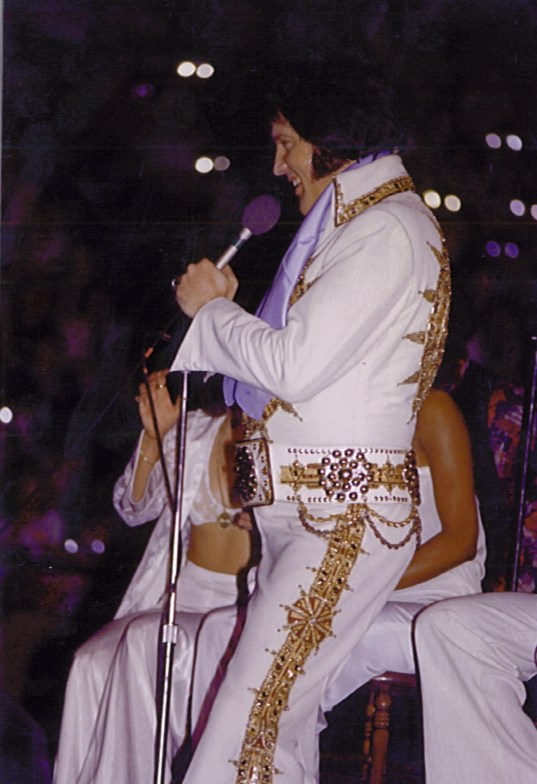
Their relationship, unlike the flashbulbs and fan hysteria that defined so much of Elvis’s life, was quiet and warm. It wasn’t built on drama, scandal, or flamboyance. It was human. Honest. Real. Behind the flashing lights and the thunderous applause, they laughed together during rehearsals, shared small conversations backstage, and offered each other support through the highs and lows of life on the road.
One moment Kathy often recalled perfectly captured the ease and warmth of their bond. On her 30th birthday, as the band tuned their instruments and stagehands bustled with the familiar pre-show activity, Elvis leaned toward her, his eyes sparkling with playful mischief, and asked:
“Kathy… how old are you today?”
She laughed, not at the question itself, but at the way he asked it—with such sweetness, such boyish teasing, and such genuine affection that it immediately dissolved the stress of touring life. It was his way of reminding the people around him that they were seen, that they mattered, that in the chaos of life on the road, someone cared.
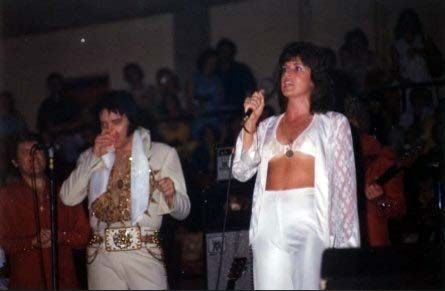
Their musical harmony mirrored their personal connection. Kathy’s soprano floated gracefully above Elvis’s rich, powerful baritone, blending in a way that was both enchanting and effortless. But behind the sound, beyond the melodies, lay something far more significant—a friendship built on trust, mutual respect, and the simple joy of making music together.
In the whirlwind of Elvis’s final touring years—the constant flashing cameras, the screaming fans, the relentless nights spent traveling from city to city—Kathy was a grounding presence. She reminded him of calm. She understood him in ways that only someone who had spent hours on stage with him night after night could. Her quiet presence allowed him to reveal a gentler side, a part of himself that most of the world would never see.
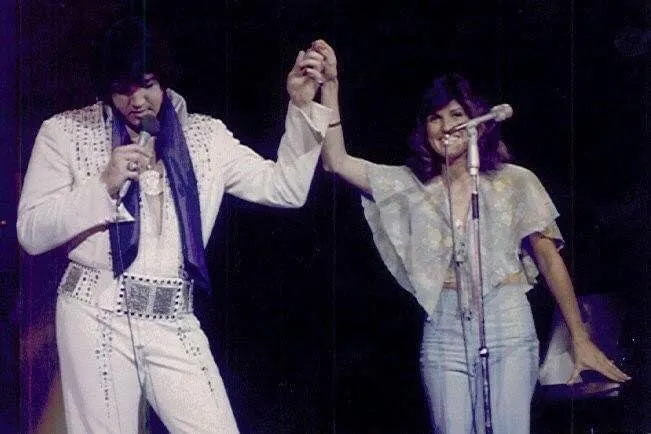
Even in the smallest moments, their bond was evident. Kathy would recall subtle gestures—Elvis handing her a drink during a long rehearsal, a quick whispered joke between songs, the way he would glance back at her during a performance, as if to say, we’re in this together. These moments, fleeting to the casual observer, were profound for those who shared them. They were threads weaving a fabric of connection that went beyond music, beyond fame, and beyond the stage.
Elvis, of course, was known for his charisma, his larger-than-life personality, and his ability to command the attention of tens of thousands at once. Yet with Kathy, he could be quietly himself. He could laugh softly without worrying about cameras. He could share a gentle word without fanfare. He could simply exist as a man among friends. In those moments, the King was human, approachable, and deeply tender.
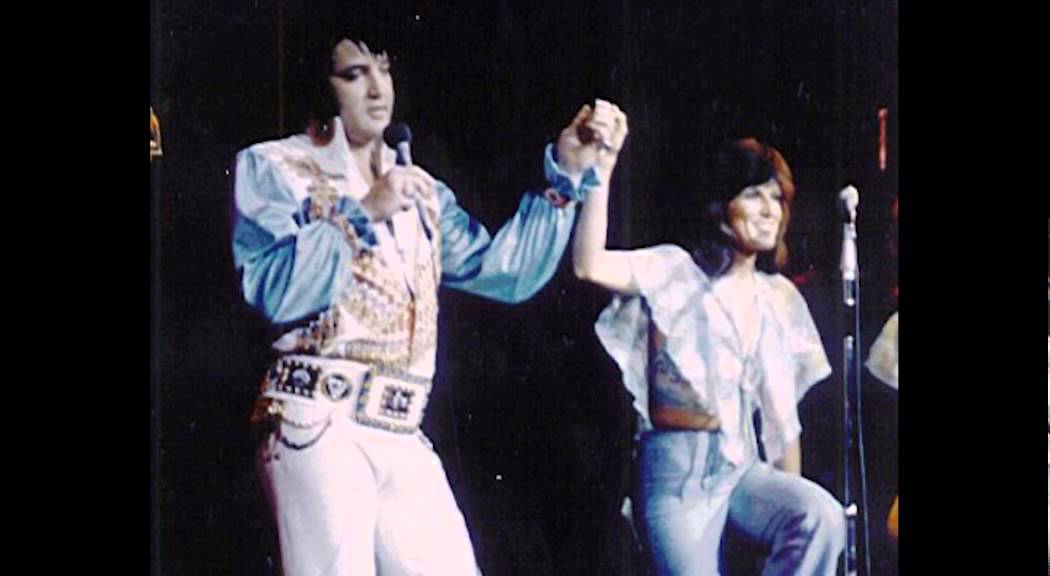
Their friendship was punctuated with small, meaningful rituals. During rehearsals, Elvis often invited Kathy to experiment with harmonies, letting her voice explore the music in ways that complemented and elevated his own. In interviews, he would casually acknowledge her presence, not as a footnote, but as someone whose talent and character mattered to him. He made her feel valued not only as a performer but as a person, a rare quality for an artist navigating the pressures of superstardom.
Kathy’s memories also remind us that the magic of their relationship was mutual. While Elvis gave her acknowledgment and gentle support, she, in turn, provided stability and camaraderie. She became a confidante, someone with whom he could share moments of levity, exhaustion, or reflection. They were companions on a journey that was both exhilarating and exhausting, a tour that demanded relentless energy, yet rewarded them with the shared exhilaration of music, applause, and artistry.
For Kathy, the simple act of standing a few steps behind Elvis each night was an honor—but one that carried weight and responsibility. She wasn’t just a backup singer; she was part of the emotional fabric of the performances, a voice that lifted the music and the man on stage. And for Elvis, her presence was more than musical—it was emotional. She represented steadiness, grace, and the quiet joy of collaboration.
Their story illustrates a side of Elvis that is often overshadowed by headlines, stage theatrics, and fan hysteria. It is a reminder that beneath the sequins, the charisma, and the historical significance, he was capable of deep, enduring human connections. With Kathy, there was no pretense, no showmanship required. It was simple, honest, and beautifully human—a friendship formed in the most authentic of ways.
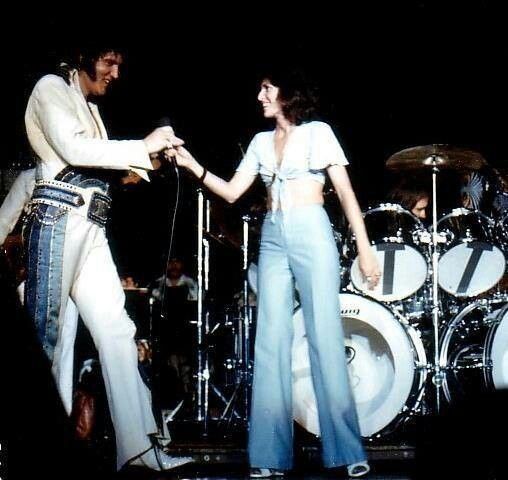
Even after the final note of a concert, their bond continued backstage, in quiet corners of dressing rooms, during brief breaks, and on long drives between cities. Kathy Westmoreland was a constant, a quiet presence in a life often defined by chaos and public expectation. And in turn, Elvis’s kindness, playfulness, and sincere appreciation for her made those years unforgettable, not just professionally but personally.
The legacy of their connection is subtle yet profound. While the world remembers Elvis Presley as the King of Rock and Roll, Kathy remembers the man. She remembers the humor, the kindness, the laughter shared in moments that the world never saw. She remembers being called “the little girl with the beautiful high voice,” a title he bestowed with affection and sincerity, and one that encapsulated the essence of their relationship: respect, warmth, and a quietly profound appreciation for one another.
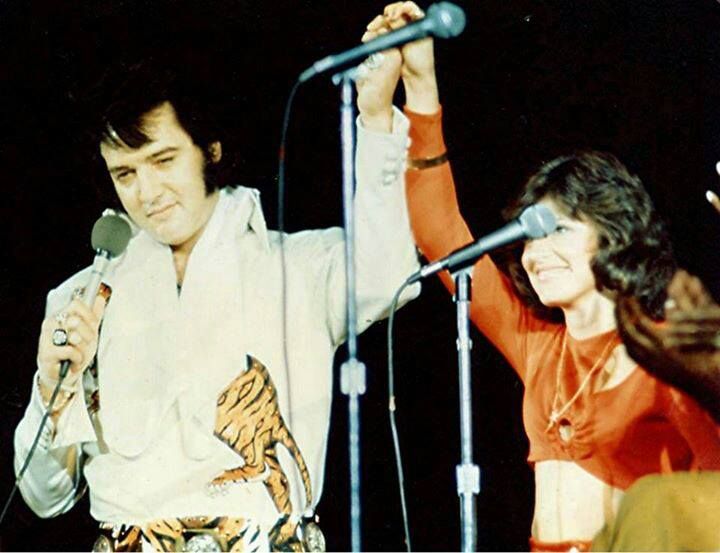
In the end, their story is more than just music. It is a testament to the human side of a legend. It is about the people who stood beside him, who shared the stage, who laughed, and who helped him navigate the complexities of fame. It is about friendship, trust, and the small, luminous moments that endure long after the applause fades.
Elvis Presley’s voice may have been legendary, his stage presence unmatched, and his fame global, but the memory of Kathy Westmoreland’s gentle soprano and their shared moments reminds us that the true magic of his life lay as much in his heart as in his music.
And so, while history remembers the King, Kathy remembers the man—the one who laughed with her, harmonized with her, and called her, every night with genuine warmth:
“This is the little girl with the beautiful high voice.”
It was more than a compliment. It was a bond. A quiet, enduring connection that stands as one of the most touching stories behind the legend of Elvis Presley.