Gladys Presley – The Only Woman Elvis Truly Feared Losing
Posted January 24, 2026
Elvis Presley loved many people in his life. He was adored by millions, surrounded by friends, desired by women, and celebrated as a cultural icon. But there was only one person whose absence truly terrified him. Only one woman whose loss he could never imagine surviving.
That woman was his mother, Gladys Presley.
Elvis did not simply love his mother in the way most sons do. He was emotionally bound to her in a way that shaped his personality, his fears, his need for reassurance, and ultimately, his unraveling. Gladys was not just his mother. She was his emotional anchor, his sense of safety, and the one person who made the world feel bearable.
From the very beginning, Elvis and Gladys shared a bond that bordered on inseparable. Raised in poverty, facing uncertainty and hardship together, they relied on each other for comfort and stability. Elvis grew up watching his mother struggle, sacrifice, and protect him with fierce devotion. In return, he clung to her with a depth of attachment that went far beyond childhood dependence.
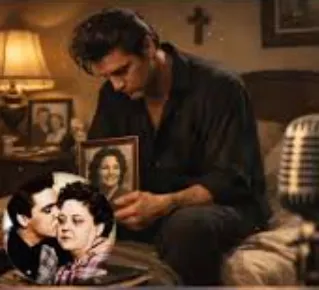
Few people know this, but Elvis could not sleep peacefully unless he knew exactly where his mother was. Even as a grown man, even as fame entered his life, that need never left him. If Gladys was not nearby, his anxiety surfaced. He needed to know she was safe. He needed to know she was close.
When Elvis began touring in the early years of his career, this dependence became painfully clear. Almost every night, no matter how late or how exhausted he was, Elvis called his mother. Sometimes the calls were long. Sometimes they were brief. And sometimes, he didn’t even need to talk.
He would simply listen.
There were nights when Elvis called just to hear Gladys breathe on the other end of the line. No conversation. No updates. Just the quiet reassurance that she was alive, present, and still there. Only then could he rest.
That level of emotional attachment is rare—and fragile.
Gladys understood her son deeply. She saw his sensitivity, his nervousness, his fear of abandonment. To the world, Elvis would soon become bold, confident, electrifying. But to his mother, he was still the soft-spoken boy who needed reassurance when storms rolled in, who feared being left alone, who carried emotions too large for his own body.
She protected him fiercely.
And Elvis, in turn, feared one thing more than anything else: losing her.
That fear became reality in August 1958.
Gladys Presley’s health had been declining, worn down by stress, alcoholism, and years of emotional strain. Elvis was serving in the U.S. Army at the time, already struggling with separation from home. When he received word that his mother was gravely ill, he rushed back, his world already cracking beneath him.
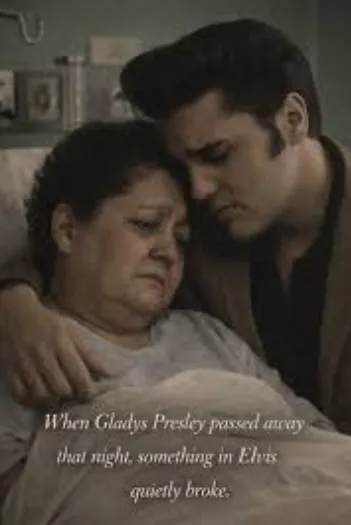
When Gladys died at just 46 years old, Elvis was destroyed.
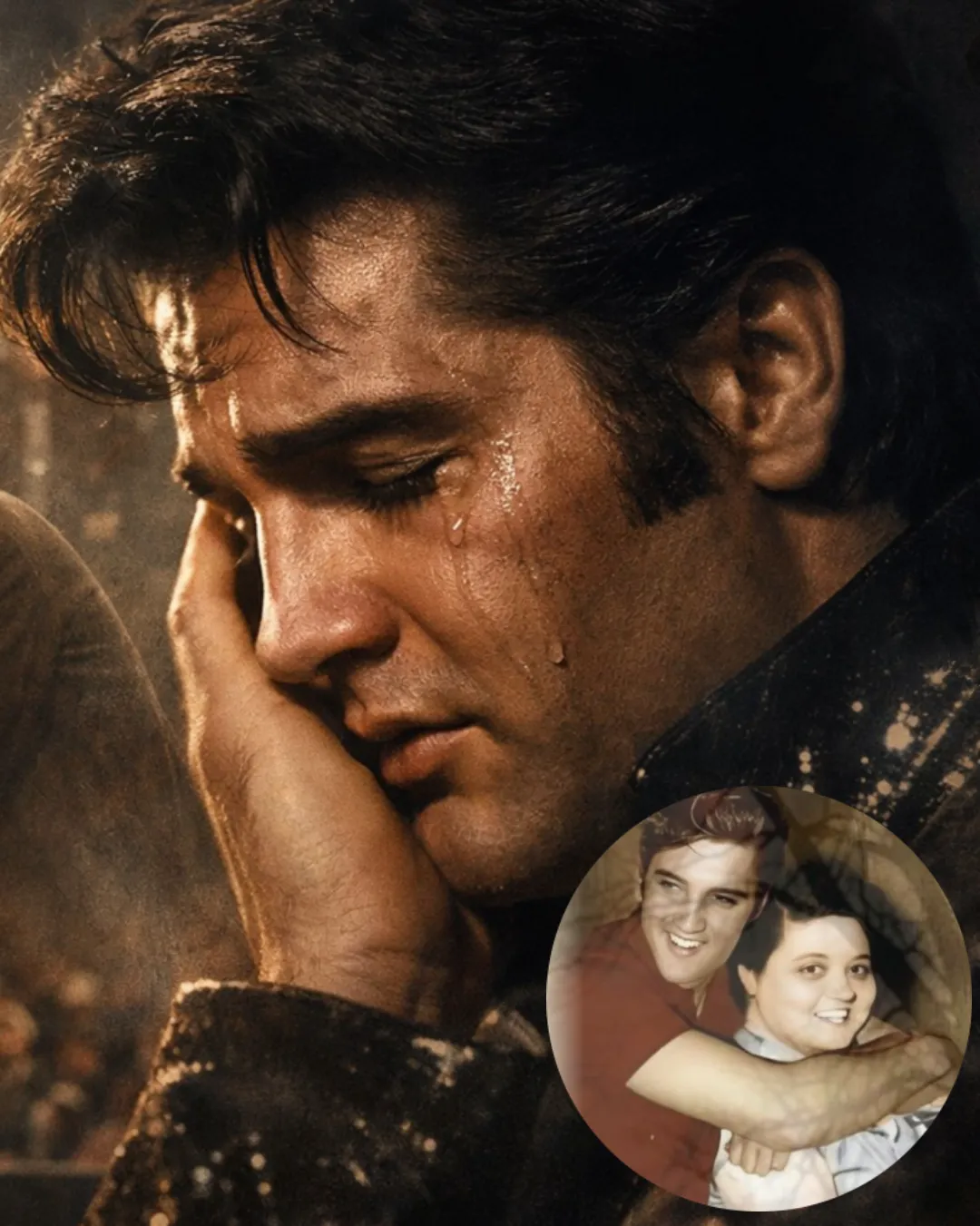
At her funeral, witnesses said he collapsed repeatedly, overcome by grief so intense it seemed to physically break him. He cried uncontrollably. He had to be supported just to stand. When it came time to close the casket, Elvis refused to leave her side. He clung to it, sobbing, begging, unable to accept what was happening.
Through tears, he said words that would haunt the rest of his life: “I’ll never be the same again.”
And he was right.
Those who knew Elvis before and after Gladys’s death noticed an immediate change. Something essential had been taken from him. The emotional safety net that had held him together was gone, and nothing ever truly replaced it.
Gladys had been the one person Elvis trusted without question. The one voice that calmed him. The one presence that made him feel grounded. Without her, he was exposed—emotionally raw in a world that would only demand more from him.
From that point on, Elvis searched endlessly for substitutes for the comfort he had lost. He surrounded himself with people constantly, afraid of being alone. He formed intense attachments. He struggled with anxiety, insomnia, and a growing reliance on medication to quiet his thoughts.
No woman who entered his life—romantically or otherwise—ever held the power Gladys had held. He loved deeply, but always with distance. Always with fear. Because the one loss he never recovered from had already happened.
In many ways, Elvis spent the rest of his life trying to numb the pain of losing his mother.
His sensitivity, once softened by Gladys’s presence, became vulnerability. His fear of abandonment deepened. His need for control over his environment intensified. And the emotional hole she left behind never closed.
It is not an exaggeration to say that Gladys Presley’s death marked the true beginning of Elvis’s inner struggle.
Behind the fame, behind the performances, behind the legend, was a man still grieving the only woman he truly depended on. The only woman he feared losing. The only woman whose absence left him permanently changed.
Elvis Presley didn’t just lose his mother in 1958.
He lost the part of himself that felt safe in the world.
And no matter how loud the applause became, no matter how powerful his voice grew, that silence—left by Gladys Presley—followed him for the rest of his life.
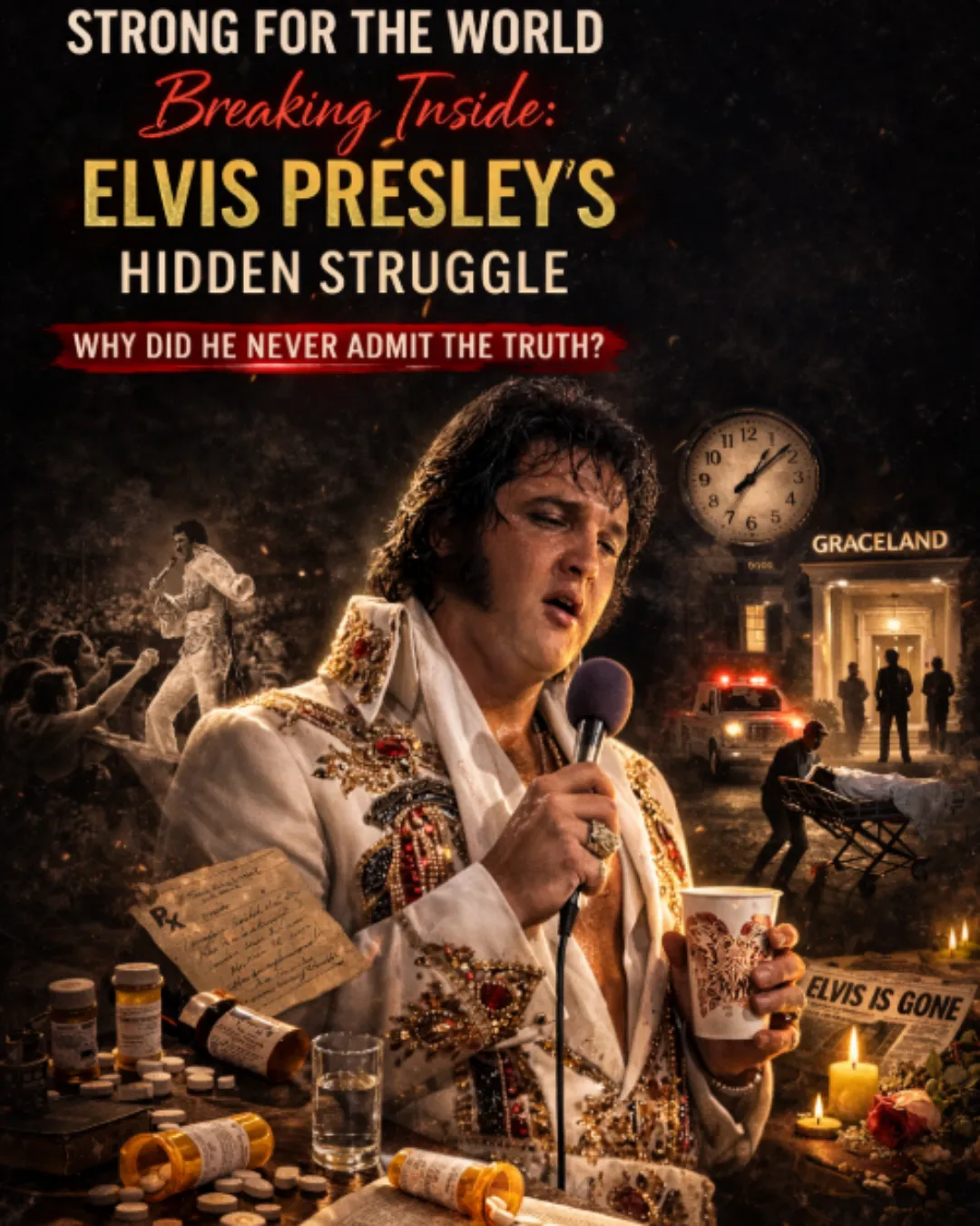
The Silence Behind the King: Why Elvis Never Admitted the Truth
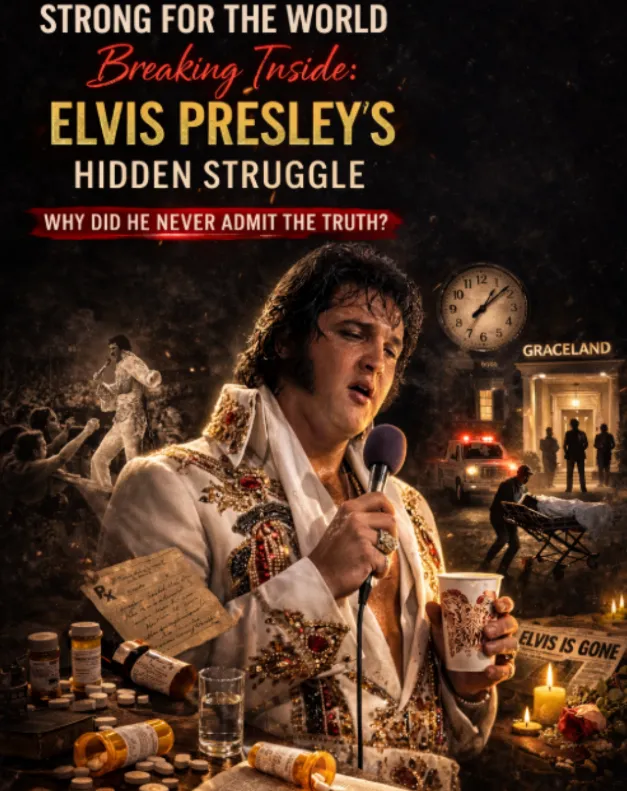
People often ask why Elvis Presley never openly admitted he had a drug problem. The question sounds simple, almost accusatory in its tone, as if the truth should have been obvious to everyone — especially to him. But the reality was far more complicated. In Elvis’s mind, he was not a man chasing euphoria or surrendering to recklessness. He was a man trying to function. Trying to keep pace with a machine that never stopped. Trying to survive the physical pain and relentless expectations that came with being Elvis Presley.
From an early age, his body carried burdens that few outside his closest circle truly understood. Chronic intestinal issues caused persistent discomfort that followed him for years. He endured debilitating migraines that could darken entire days. Bright stage lights aggravated ongoing eye problems, yet night after night he stood beneath that glare, delivering performances charged with intensity and emotion. The audience saw magnetism. They saw power, confidence, control. What they did not see was the exhaustion that crept in once the curtain fell, or the quiet suffering that waited in hotel rooms long after the applause faded.
Fame magnified everything. A simple headache for another man became a crisis when thousands were waiting for him to take the stage. A restless night of insomnia turned dangerous when a show was scheduled for the following evening, tickets sold, expectations sky-high. Slowing down did not feel like an option. Canceling felt unthinkable. The persona of Elvis — strong, dependable, larger than life — had to be maintained.
When he sought medical help, he was not met with stern warnings to rest or reconsider his schedule. Instead, he was handed prescriptions. Medication to sleep when his mind raced too loudly to allow rest. Medication to wake when fatigue pressed heavily on his bones. Medication to dull the pain so he could move, sing, and endure another performance. Each bottle bore the authority of a physician’s signature. Each pill came wrapped in reassurance. These were not back-alley transactions or secretive indulgences. They were treatments, administered within a system that framed them as solutions.
To Elvis, that distinction mattered. He did not see himself as someone abusing drugs; he saw himself as someone following medical guidance. The pills were tools, not temptations. They were part of a regimen designed to keep him operational. In his mind, he was being responsible — doing what was necessary to fulfill commitments, to honor contracts, to avoid disappointing fans who had traveled far and spent hard-earned money to see him perform.
Admitting there was a problem would have required more than acknowledging dependency. It would have meant confronting the possibility that he could not carry the weight alone. And Elvis carried deep pride in being strong for others. He had grown up determined to provide, to protect, to give generously. That instinct never left him. If anything, it intensified as his fame grew. He wanted to be the man who showed up, no matter how he felt. The performer who never faltered. The provider who never failed.
In that framework, confession felt like collapse. To say, “I can’t manage this,” would have felt like betraying the very identity he had built. So instead, he told himself he was in control. That the medications were temporary supports. That he could adjust, reduce, stop whenever necessary. The narrative he created was one of management, not dependence. Of endurance, not vulnerability.
Looking back now, it is easy to label that mindset as denial. History often reduces complex struggles into single words. But perhaps what happened was something more deeply human. Elvis was overwhelmed — physically, emotionally, spiritually. He was navigating chronic pain in an era when long-term pharmaceutical consequences were less openly discussed. He was surrounded by professionals whose assurances quieted doubts before they could grow too loud. He trusted the system. He trusted that what was prescribed was safe because it was legal and medically sanctioned.
There were also the quieter forces at work: shame and expectation. Public figures are rarely granted the freedom to be fragile. For someone whose image was tied to vitality and charisma, admitting vulnerability felt dangerous. The world did not want a struggling icon; it wanted a legend. And Elvis, sensitive and eager to please, absorbed that expectation. He feared letting people down far more than he feared the side effects of another pill.
In private moments — if they came — when he may have sensed something slipping, there was little space for honest reckoning. Tours resumed. Recording sessions were scheduled. Appearances demanded preparation. Momentum replaced reflection. Silence replaced confession. The question “Am I in trouble?” may have surfaced, only to be buried under the next obligation.
He was not blind to his struggles. But acknowledging them fully would have required dismantling the illusion that he could endure anything. And endurance had become central to his identity. He had built a career on pushing boundaries, on exceeding limits. Admitting he had reached one felt like surrender.
There is tragedy in that. Not the sensationalized tragedy of headlines, but the quiet tragedy of a man who believed strength meant never admitting weakness. Of someone who equated asking for help with failing those he loved. He did not wake up intending to spiral. He woke up intending to function — to rehearse, to perform, to meet expectations. Each day was about getting through, about staying reliable.
In the end, the question of why he never openly admitted a problem may reveal less about stubbornness and more about fear — fear of shame, fear of disappointing others, fear of losing control of a narrative he had fought to maintain. He trusted that what he was doing was necessary. He believed he was managing the cost of greatness.
And perhaps that is the most human part of all. A gifted performer, admired by millions, quietly convincing himself that survival equaled strength. A man in pain, holding tightly to the idea that he could handle it alone. In the silence where he might have said, “I am hurting,” there was only resolve — fragile, determined, and ultimately heartbreaking.
The world remembers the voice, the charisma, the legend. But behind the myth was a man trying to keep up with the pace of his own success. A man who believed he was doing what he had to do to remain dependable. And in that belief — sincere, complicated, and painfully human — lies the answer to a question that was never as simple as it seemed.