
THE RISE AND TRAGIC FALL OF ANDY GIBB: THE FIFTH GIBB BROTHER WHO SHINED TOO BRIGHT
Watch the video at the end of this article.
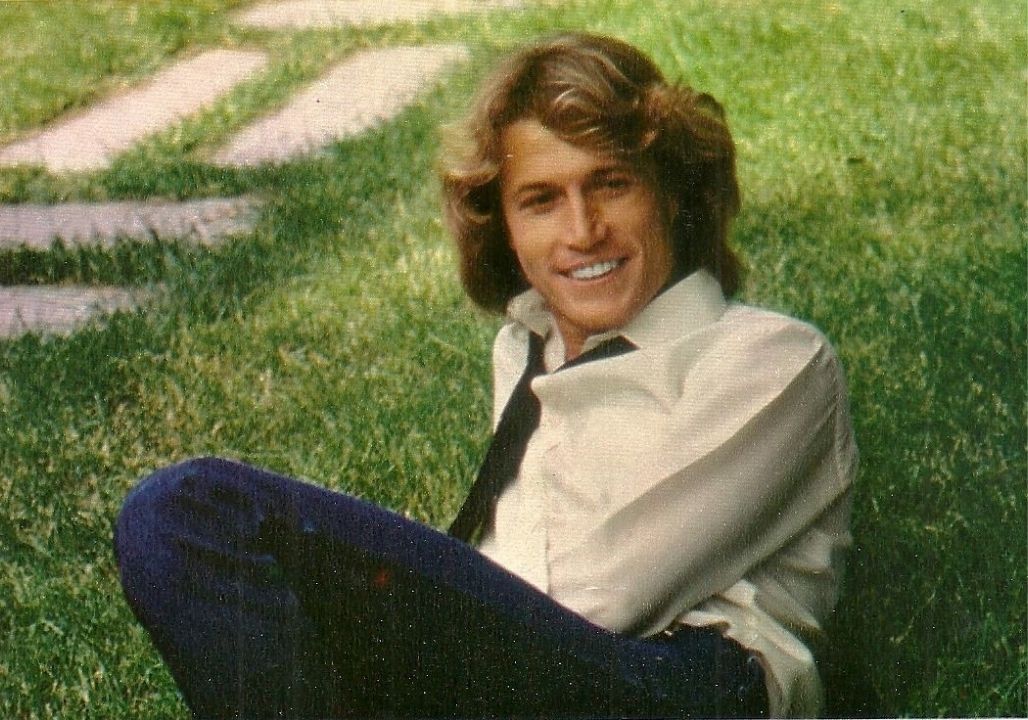
Andrew Roy Gibb was born on March 5, 1958, in Manchester, England—the youngest of five children in a family that would soon change the landscape of popular music. Three of his older brothers, Barry, Robin, and Maurice, would become the Bee Gees, one of the most successful and influential trios in pop history.
When Andy was just six months old, the family uprooted and moved to Australia, only to return later to the U.K. when the Bee Gees’ career began its meteoric rise. As the youngest Gibb, Andy enjoyed a childhood unlike most: riding through London in limousines at age 12, surrounded by fame, music, and the intoxicating glamour of rock-and-roll life.
It was Barry Gibb who eventually encouraged his baby brother to pursue music. With that, Andy dropped out of school in his early teens and set his sights on a career of his own.
An Early Start — and Early Setbacks
In 1974, Andy formed his first band, the short-lived Melody Fayre, and moved to Australia in search of opportunity. But like many young groups, the band failed to take off, and his bandmates eventually returned to the U.K. Andy stayed behind, recording demos produced by Australian music legend Col Joye.
Then came the breakthrough.
Gibb scored two chart successes in Australia with self-penned singles “Words and Music” and “Westfield Mansions,” establishing himself as a rising talent.
The Miami Transformation
In 1976, impressed by the young artist’s potential, Bee Gees manager Robert Stigwood signed Andy to RSO Records. The teenager moved to Miami, joining his brothers and working closely with Barry on new material.
At the same time, Andy’s personal life was in bloom: he married his girlfriend Kim, and the couple welcomed their daughter, Peta. But like many chapters in Andy’s story, this happiness would be short-lived.
His debut album, Flowing Rivers, delivered an explosive breakthrough. “I Just Want to Be Your Everything,” written by Barry, shot to No. 1 in the U.S. The follow-up single, “(Love Is) Thicker Than Water,” co-written with Barry, also topped the charts.
The album was such a phenomenon that it knocked the Saturday Night Fever soundtrack—featuring Bee Gees hits—out of the top position.
Suddenly, Andy Gibb was everywhere: on magazine covers, television programs, and posters on teenage bedroom walls. His combination of boyish charm, golden looks, and soulful vocals made him a global heartthrob. Yet beneath the glamorous surface, darker currents were already forming.
A Star Overshadowed by Demons
As Andy’s fame soared, so did a serious cocaine addiction that would eventually consume his finances, his career, and his relationships. Though widely loved for his sweetness and humor, Andy also battled depression and deep-seated insecurities—forces that fed into his drug dependency.
In 1978, Andy released Shadow Dancing, his second album. Its title track—written by all four Gibb brothers—became another No. 1 smash. The album spawned further hits such as “An Everlasting Love” and “(Our Love) Don’t Throw It All Away.”
But success only masked the storm behind the scenes.
A Career Derails
Andy began working on his third album, After Dark, in 1980, which included a duet with Olivia Newton-John. It would be his final studio album. His cocaine-fueled instability soon led RSO Records to drop him.
He attempted a pivot into television, co-hosting Solid Gold, where his charisma shone through. But his personal life again made headlines when he began a high-profile romance with actress Victoria Principal. The relationship, strained by Andy’s dependence on drugs, collapsed under its own weight.
In 1982, Andy earned rave attention for joining the Broadway cast of Joseph and the Amazing Technicolor Dreamcoat. Yet within a year, he was fired for missing performances. His team insisted drugs were not to blame—but few believed it.
By 1985, Andy finally entered rehab. But the damage was deep and long-lasting. His finances crumbled alongside his career. When he declared bankruptcy in 1987, he reported earning just $8,000 the previous year—a heartbreaking fall for a former global superstar.
A Last Attempt at a Comeback
In early 1988, Andy signed with Island Records and moved to London, hopeful for a fresh start. He had just celebrated his 30th birthday and was working on new music. But his body—ravaged by years of addiction and emotional turmoil—could no longer sustain him.
On the morning of March 10, 1988, Andy was admitted to the hospital complaining of chest pains. He died later that day.
A Final Resting Place—and a Legacy Frozen in Youth
After a memorial service at Robin Gibb’s home, Andy’s body was flown to Los Angeles and laid to rest at Forest Lawn Memorial Park. His headstone reads simply:
ANDY GIBB — AN EVERLASTING LOVE
Remembering Andy Gibb
To his family, he was the sweet youngest brother. To fans worldwide, he was the golden boy of late-’70s pop. His voice—gentle, romantic, unmistakably Gibb—filled the radio waves for a brief but brilliant moment.
But Andy struggled to see what others saw in him: a gifted, beautiful, deeply loved soul. His story is not just one of talent and tragedy—it is a reminder of the fragile line between stardom and self-destruction.
In memory, Andy Gibb remains forever young.
?si=GoZ6EGfIsGKsPAmK" class="lazy-load-youtube preview-lazyload preview-youtube" data-video-title="What happened to ANDY GIBB?" title='Play video "What happened to ANDY GIBB?"'>?si=GoZ6EGfIsGKsPAmK