
The Boy Who Carried Responsibility Long Before Becoming a Legend
The Presley family often spoke about Elvis’s childhood with a blend of pride and quiet tenderness. In their memories, he was not a dreamy child lost in imagination, but a boy who carried an unusual sense of responsibility from a remarkably young age—something that only became fully clear when his life was viewed in its entirety.
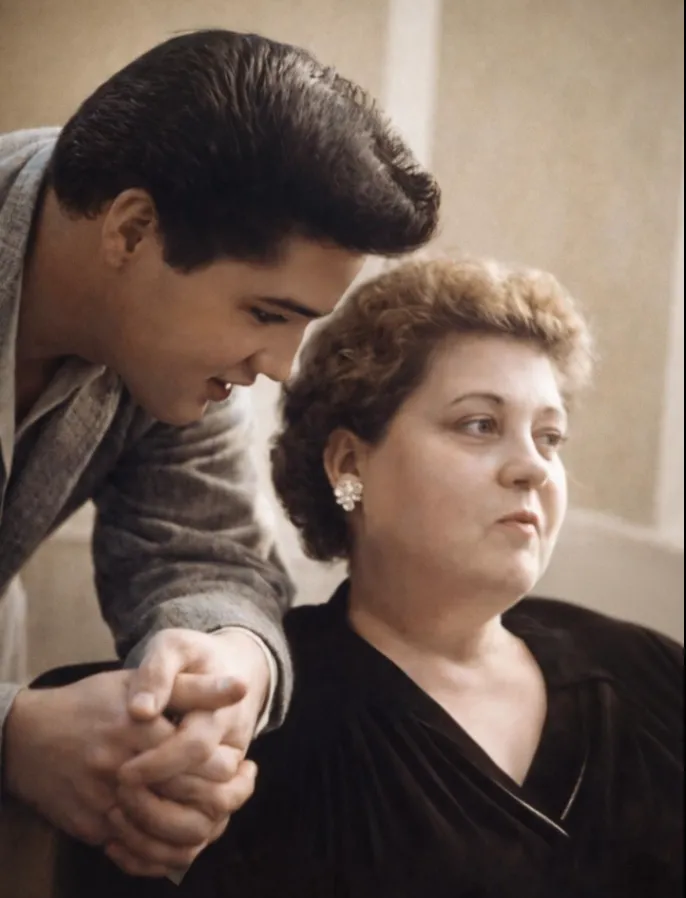
Gladys Presley, Elvis’s mother, never forgot a moment from when her son was barely four years old. It was not dramatic or extraordinary. There were no witnesses expecting a prophecy. Elvis simply looked up at her with a seriousness that felt far beyond his years and told her not to worry. He promised that when he grew up, he would buy a big house and two cars—one for her and his father, and one for himself. He spoke these words openly, even in front of others.
What stayed with Gladys was not the size of the promise, but the way he said it. It did not sound like a child’s fantasy. There was no playful exaggeration or make-believe tone. There was certainty. She believed him because his words felt grounded, as though he already saw his future not as a dream, but as a responsibility he intended to fulfill.
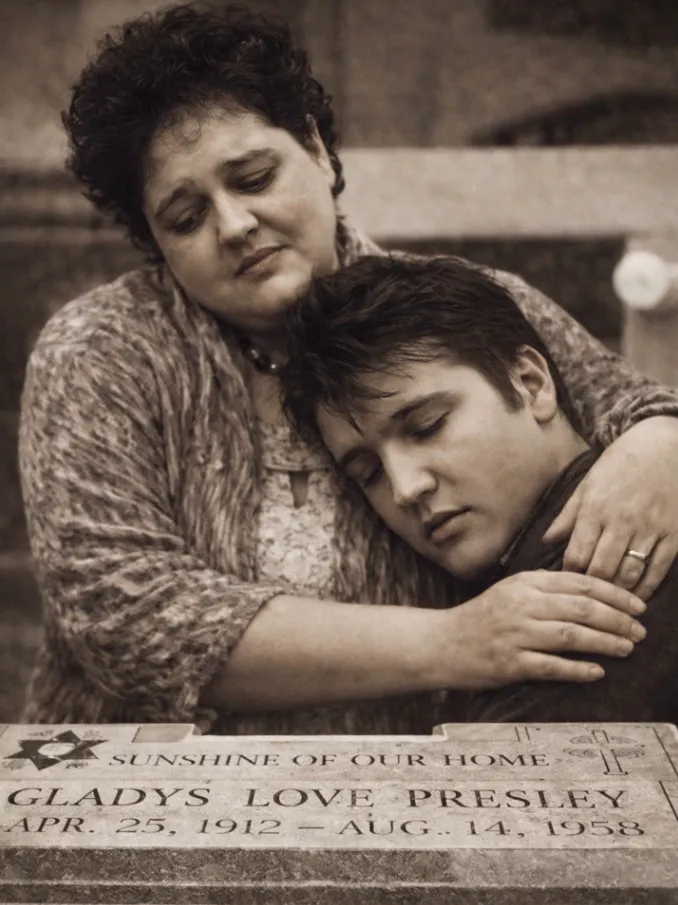
The Presley family lived with very little. Money was scarce, opportunities were limited, and survival often depended on careful choices. Yet even as a child, Elvis seemed to understand that love was more than emotion—it was action. Caring for his parents came naturally to him, not because anyone demanded it, but because it felt right.
As Elvis grew older, those early promises did not fade. They quietly turned into behavior. While still in high school, he took on afternoon jobs without being asked. There was no ceremony or expectation. He simply decided that if he could help, he should. Gladys later recalled moments when Elvis would go out and return having paid the grocery bill himself—twenty-five or thirty dollars at a time, an amount that meant everything to a family living paycheck to paycheck.
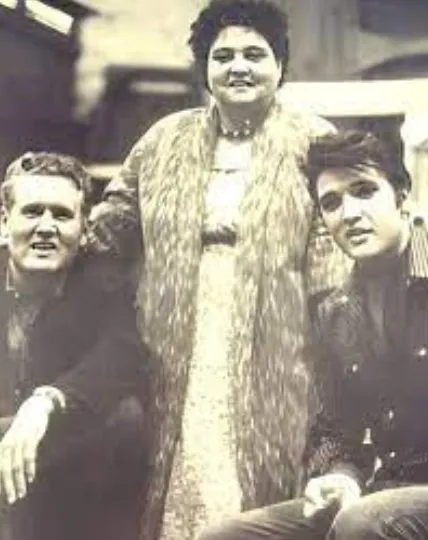
He never spoke of these acts as sacrifices. He did not seek praise. To Elvis, helping his parents was not a burden—it was a source of pride. It allowed him to stand a little straighter, knowing he was contributing to the family’s stability.
At one point, Elvis convinced his father, Vernon Presley, to buy him a lawn mower. He wanted to earn his own money through honest work. Each week, he brought home eight dollars. The amount was modest, but to Elvis, it represented independence and purpose. It was proof that he could carry his share of the weight.
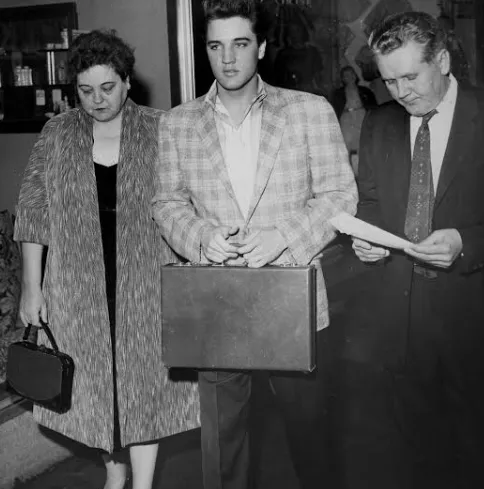
Vernon later joked that the lawn-mowing business did not last long once neighborhood girls began stopping to watch Elvis work. But beneath the humor was a deeper truth. From the beginning, Elvis was a boy who spoke his intentions aloud—and then lived up to them. He did not wait for success to become generous. He practiced generosity when he had almost nothing.
These early habits shaped the man Elvis Presley would become. Long before fame arrived, he had already learned how to give. The generosity the world later witnessed—the cars, the money, the spontaneous acts of kindness—was not a product of wealth. It was a continuation of character.
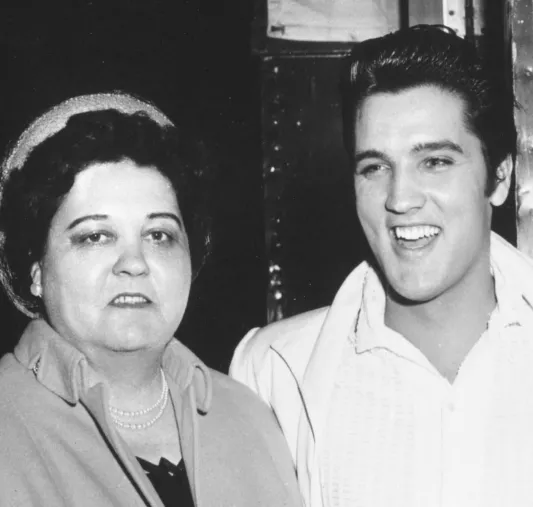
When Elvis achieved fame, that same sense of responsibility followed him. He did not see success as freedom from obligation, but as an expansion of it. He felt deeply responsible for his family, for those who supported him, and for the people who believed in him. He gave not because it made headlines, but because it felt necessary to remain true to himself.
This sense of duty also came with weight. Elvis did not live only for his own desires. He carried the expectations of others, the promises he had made, and the emotional needs of those around him. That burden, invisible to the public, shaped much of his inner life. Even at the height of fame, he remained deeply connected to his roots, never fully separating the man he was from the boy he had been.
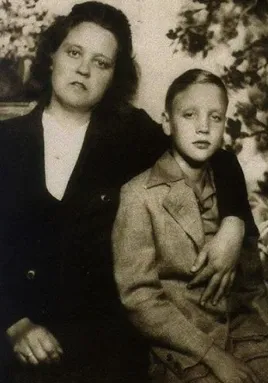
Looking back, these small childhood stories carry more meaning than any myth built around his name. They reveal that behind the legend was a human being who learned early that love requires effort. Elvis did not become compassionate because he was famous. He became famous as someone who already knew how to care.
Perhaps this is why his legacy endures beyond music. His voice changed the sound of a generation, but his character shaped the way people remember him. He kept promises. He looked after his family. He gave freely, even when it cost him something. These traits did not appear suddenly—they were there from the start.
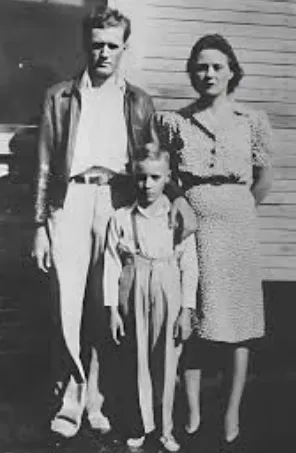
The boy who promised his mother a house and two cars eventually fulfilled that promise and far more. But the deeper fulfillment lay not in what he gave materially, but in how consistently he honored the values he formed as a child. Elvis Presley did not rise from nothing and forget where he came from. He carried his beginnings with him every step of the way.
Before he became the King of Rock and Roll, Elvis Presley was a son who understood responsibility. And perhaps that truth—quiet, steady, and deeply human—is the strongest foundation of his legend.
Before He Sang, He Looked Broken — Then the Music Changed Everything
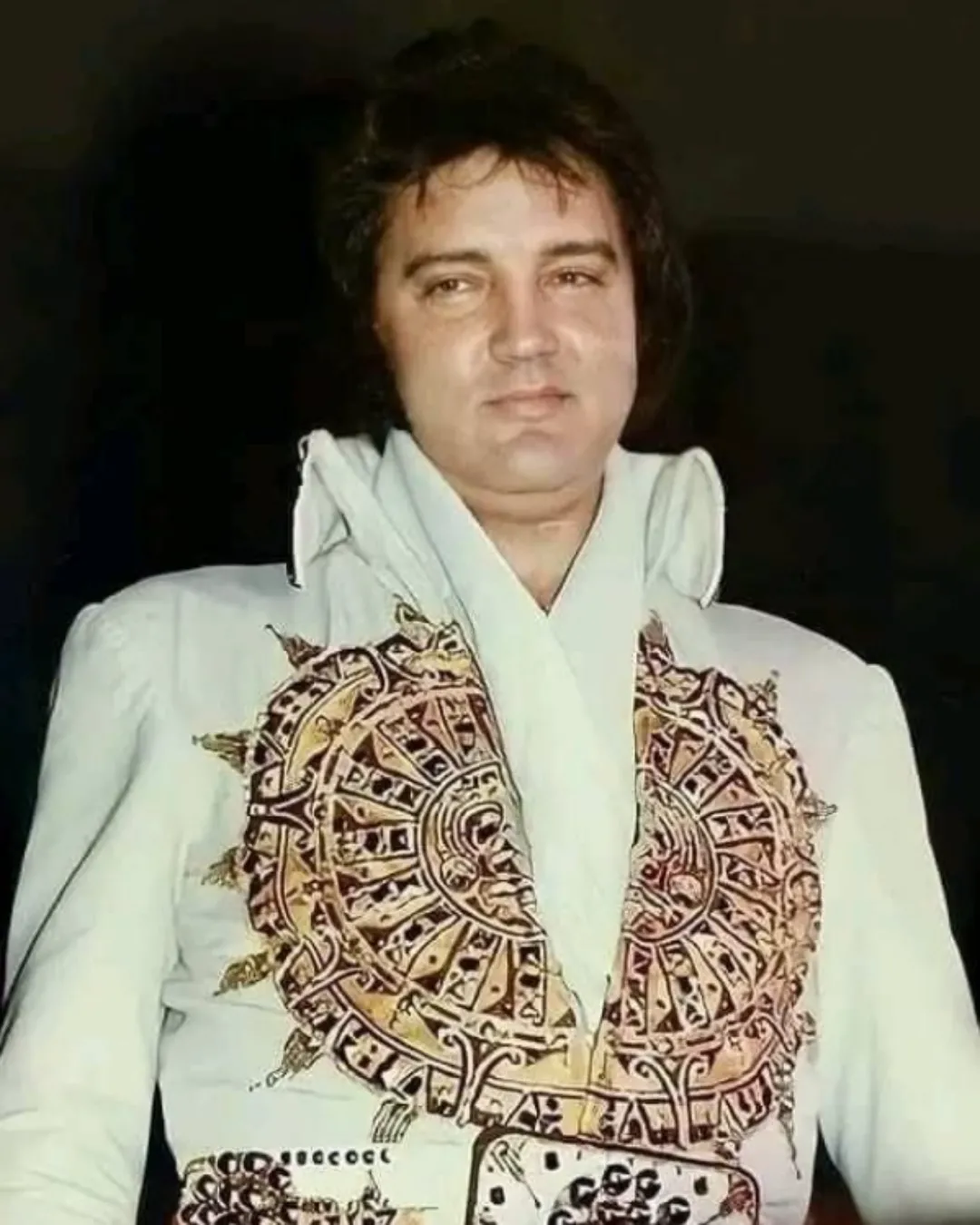
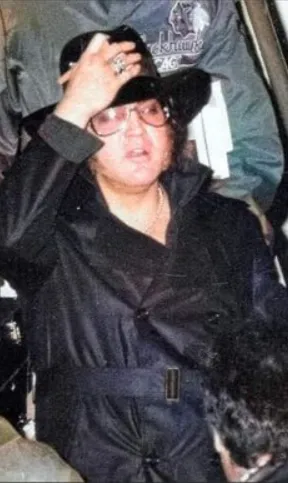
Many people who watch footage from Elvis Presley’s final concert are struck by the same haunting contradiction. Before the music begins, when he steps forward to introduce the song, his voice sounds fragile and uneven. The words come slowly, as if speaking itself requires effort. His movements are careful, almost heavy, and his body shows clear signs of exhaustion. In those few seconds, it can be painful to watch. The worry settles in quietly, and what stands before the audience does not look like an untouchable icon, but like a man who has given too much and has very little left to draw from.
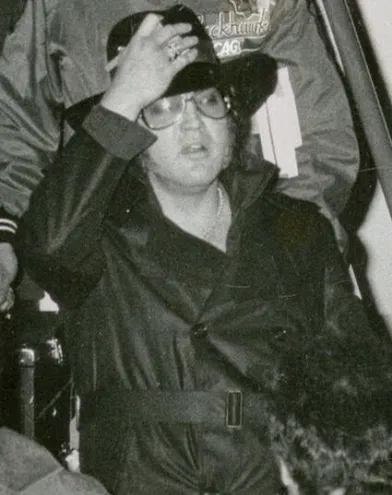
It is a moment that forces honesty. There is no glamour in it. No illusion. Just a human being standing under bright lights, carrying the visible weight of years spent performing, pleasing, enduring, and surviving. For many viewers, it is uncomfortable because it feels too intimate. We are not watching a performance yet—we are witnessing vulnerability.
And then the music begins.
Something extraordinary happens the instant the first notes rise. It is as though Elvis reaches into a place far deeper than physical strength. His posture changes. His breathing steadies. His voice, moments earlier uncertain, comes alive—rich, powerful, and emotionally charged. The fragility vanishes, replaced by a presence so familiar it feels almost miraculous. This is The King again. Not flawless, not polished, but unmistakably himself.
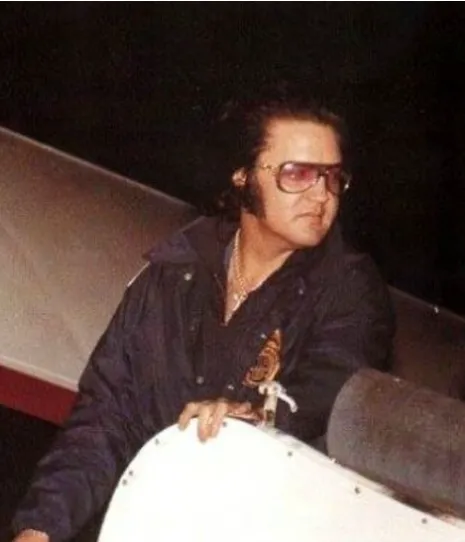
What fills the room is not perfection. It is truth.
Elvis is no longer performing with his body. He is performing with his soul.
There is a raw honesty in that final performance that no healthy, younger version of Elvis could have delivered in quite the same way. Every note carries experience. Every phrase sounds lived in. The cracks in his voice do not weaken the song—they deepen it. The audience is no longer witnessing a show; they are sharing a moment. And that moment is powerful precisely because it is fragile.
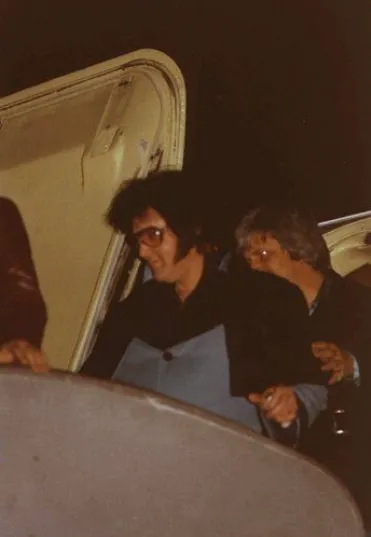
This transformation is what led many people, years later, to look more closely at Elvis’s final months. The popular narrative often reduces that period to decline—illness, exhaustion, dependency, tragedy. But when examined honestly, the truth is more complex, and in many ways, more remarkable.
Even near the end, Elvis Presley was still a massive force.
His concerts continued to sell out. Crowds filled arenas not out of pity, and not simply out of nostalgia. They came because Elvis still delivered something no one else could. When he sang, people felt seen. They felt understood. His voice carried emotional weight that reached past entertainment and into something deeply personal.
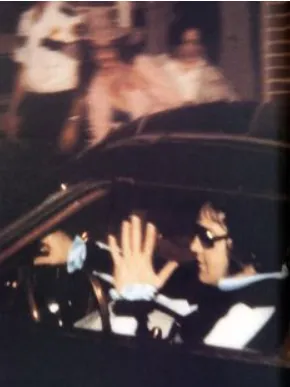
That connection never left him.
Despite failing health, despite pain, despite nights when simply standing upright was a challenge, Elvis continued to step onto the stage. Not because he was obligated, but because music was the one place where everything else fell away. The stage was where he was most himself. It was where the noise of the world quieted, and the truth came through.
That final concert, so often viewed as evidence of decline, is better understood as a testament to devotion.
Elvis did not walk onto that stage pretending he was invincible. He walked onto it knowing his limitations—and singing anyway. That takes a different kind of strength. Not the strength of youth or stamina, but the strength of purpose. The strength of someone who understands that giving, even when it hurts, is part of who they are.
In those last performances, Elvis was no longer chasing success. He had nothing left to prove. What remained was commitment—to the music, to the audience, and to the part of himself that only existed when he sang.
There is something deeply human about that choice.
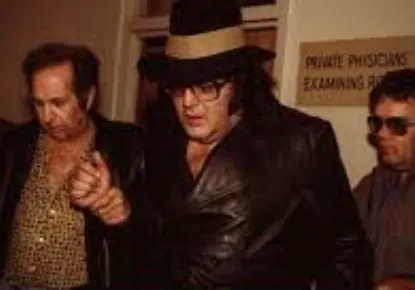
For decades, Elvis had lived under relentless expectation. He was expected to be larger than life, endlessly energetic, eternally grateful, and perpetually available. His personal struggles were rarely met with understanding. Weakness was something the world preferred not to see in its heroes. And yet, on that final stage, weakness and greatness stood side by side.
That is what makes the moment unforgettable.
When Elvis sings in that final concert, he is not hiding his pain. He is transforming it. The song becomes a vessel for everything he can no longer say in words. The audience senses it. They feel it. And in that shared recognition, something rare happens: the barrier between legend and listener disappears.
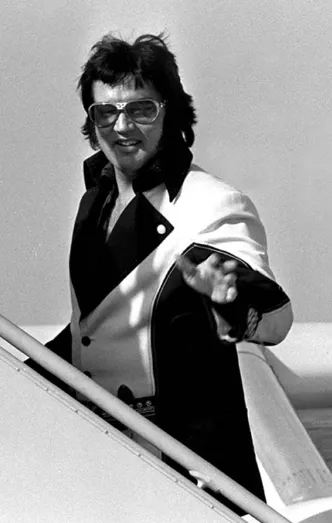
Elvis is no longer a myth in that moment.
He is a man.
And he is giving everything he has left.
That is why the final concert should not be remembered as the end of something beautiful, but as the completion of a long, demanding journey. It shows an artist who stayed true to his calling even when it cost him dearly. Someone who chose presence over retreat. Honesty over illusion.
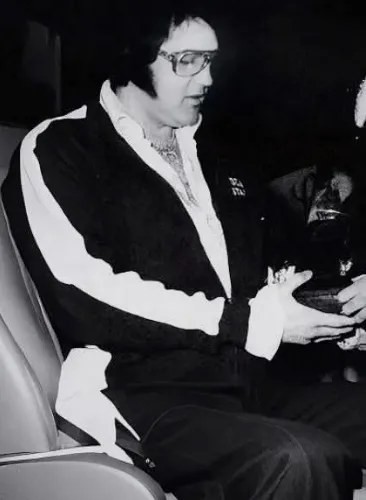
Elvis Presley did not fade quietly.
He did not disappear.
He stood under the lights, imperfect and exhausted, and sang anyway.
And because of that, he remained monumental to the very end.
Not because he was strong,
but because he was sincere.
Not because he was flawless,
but because he was real.
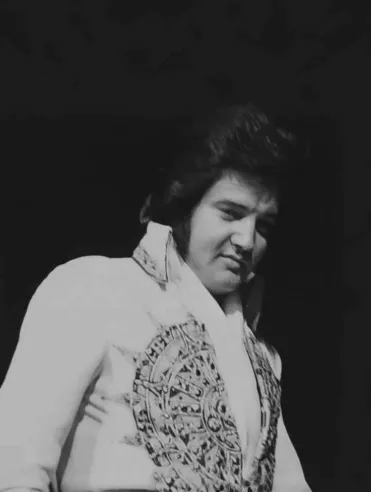
Some artists are remembered for their peak moments. Others are remembered for their courage. Elvis is remembered for both. But in that final concert, it is courage that lingers longest—the courage to show up, to be vulnerable, and to give what remained of himself to the people who loved him.
That is not the image of a legend collapsing.
It is the image of an artist finishing his song.
And that is why, even in his final moments on stage, Elvis Presley was not diminishing.
He was unforgettable.