
The Gates That Sang: How Elvis Presley Turned Graceland into a Living Legend
When Elvis Presley first purchased Graceland, it was a stately home, elegant and welcoming, but to him it was not yet complete. It had walls, rooms, and land—but it did not yet speak. Elvis believed that a home should say something before a single word was exchanged, before a door was opened. He wanted Graceland to announce who lived there, not through luxury or grandeur, but through truth. And for Elvis, that truth was music.
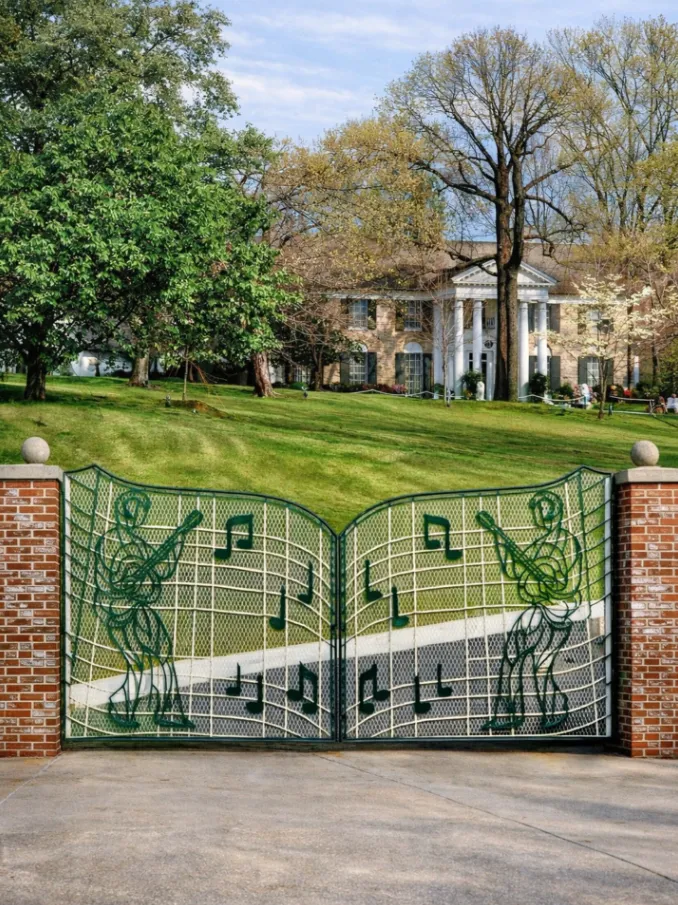
In those early days, the now-iconic music gates did not exist. Visitors arrived to an ordinary entrance, unaware that they were approaching the home of a man whose life revolved entirely around rhythm, melody, and feeling. Elvis sensed that something was missing. Graceland needed a threshold that marked the passage from the everyday world into his world. Not a barrier meant to keep people out, but a statement meant to welcome them in.
Elvis imagined gates that would do more than protect the property. They needed to sing. In his mind, the entrance to his home should reflect the force that had shaped him from childhood, the gift that had given him purpose long before it gave him fame. Music was not an accessory to his life—it was the core of his identity. Without it, Elvis was incomplete. And so the gates would be built not as decoration, but as an extension of his soul.
To bring this vision to life, Elvis worked with designer Abe Saucer, a man capable of translating emotion into form. Together, they discussed ideas that went far beyond standard design. Elvis wanted movement, not rigidity. He wanted sound captured in stillness. He wanted the gates to tell a story without words.
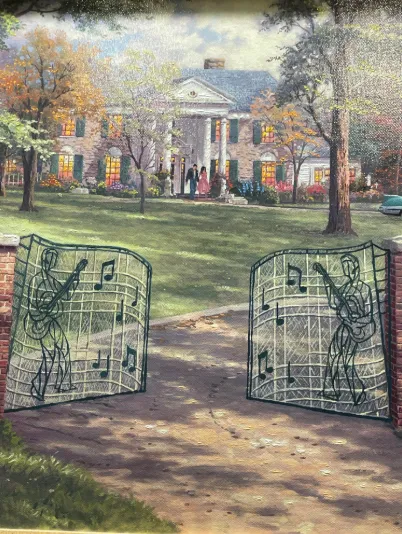
The result was a bold and deeply personal concept: wrought-iron gates adorned with musical notes and a central figure shaped unmistakably in Elvis’s own likeness. Guitar in hand, frozen mid-song, the silhouette was not meant to glorify fame. It was meant to reflect devotion. The image showed a man defined not by applause, but by expression—by the act of creating music itself.
The gates were custom built by Memphis Doors Inc., under the skilled craftsmanship of John Dillars Jr. Every curve, every note, every line was shaped with intention. This was not mass production. This was artistry. On April 22, 1957, the gates were delivered and installed. There was no ceremony, no public announcement. Yet the transformation they brought was profound.
With their arrival, Graceland changed forever.
What had once been a private residence now carried symbolic weight. The gates became a boundary not just of land, but of meaning. Beyond them lived a man whose heart belonged to music long before it belonged to the world. The entrance no longer simply opened onto a driveway—it opened onto a life.
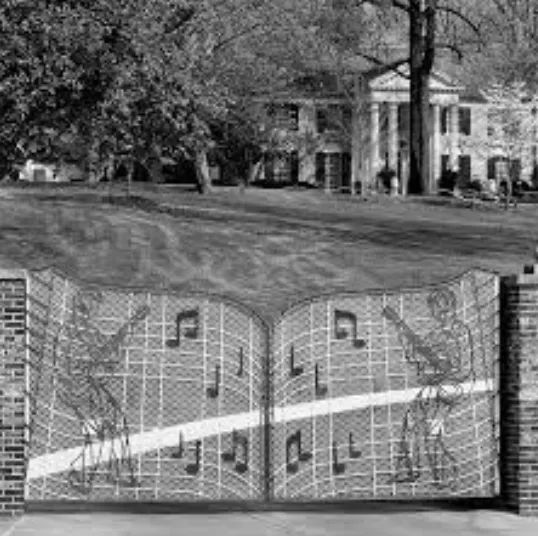
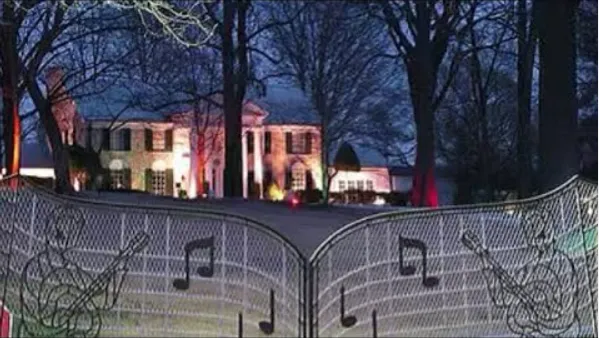
The design was unmistakable. Musical notes curved across the iron like sound caught mid-air. They suggested movement, rhythm, and flow, as if the metal itself were alive. At the center stood Elvis’s silhouette, guitar raised, eternally poised between silence and song. It was not an image of excess. There were no crowns, no titles, no symbols of wealth. Only music.
That choice spoke volumes.
Elvis could have chosen gates that flaunted success. By 1957, he had already achieved what few ever would. But that was never what mattered most to him. The gates did not declare, “A star lives here.” They declared, “A musician lives here.” They honored the boy who grew up poor but rich in sound, the young man who found salvation in melody, the artist who never separated his identity from his music.
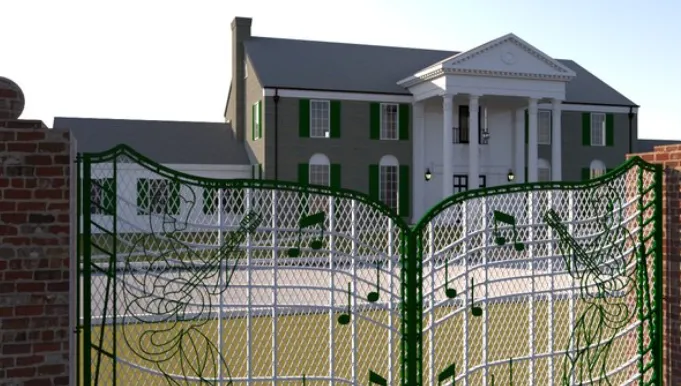
Over time, the gates took on a life of their own.
To fans, they became a symbol of arrival. Standing before them felt like standing on sacred ground. Countless visitors gathered there, leaving flowers, notes, and memories pressed against the iron. For many, touching the gates felt like touching history itself. They were no longer just an entrance; they were a pilgrimage point.
To history, the gates marked the boundary between legend and humanity. Outside them stood the myth—Elvis Presley, icon of rock and roll. Inside them lived the man—Elvis, the son, the friend, the dreamer who needed solitude as much as he needed sound. The gates quietly held that balance, separating the public world from the private one.
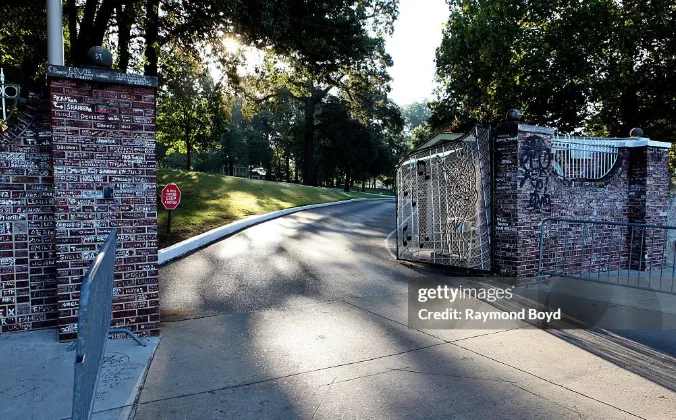
And to Elvis himself, the gates were a reminder.
No matter how far his fame reached, no matter how loud the crowds grew, everything he was began and ended with music. It was there before the world knew his name, and it remained when the noise faded. The gates reflected that truth back to him every time he came home.
In later years, as Graceland became a place of mourning and remembrance, the gates took on yet another meaning. They stood watch as fans gathered in grief. They bore witness to tears, candles, and silence. Still, they did not change. They continued to sing—quietly, steadily—of the man who had poured his life into every note he ever sang.
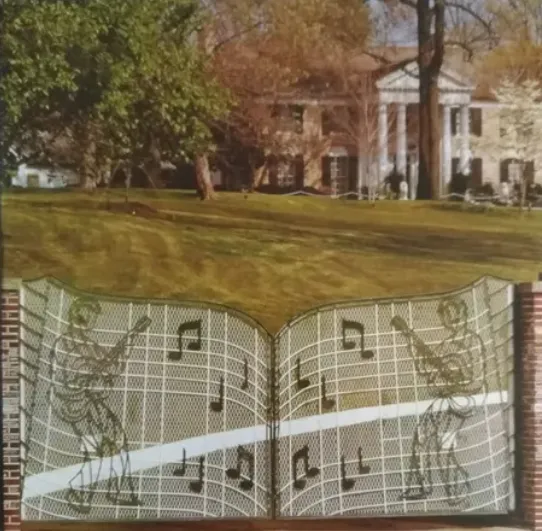
Today, the gates still stand.
They guard Graceland, yes—but more importantly, they carry Elvis’s spirit forward. They tell his story without explanation. They remind us that before he was a legend, he was an artist. Before he was a symbol, he was a soul in love with music.
Note by note.
Line by line.
Forever.
“E Sa”: The Name Elvis Presley Whispered Only to His Daughter
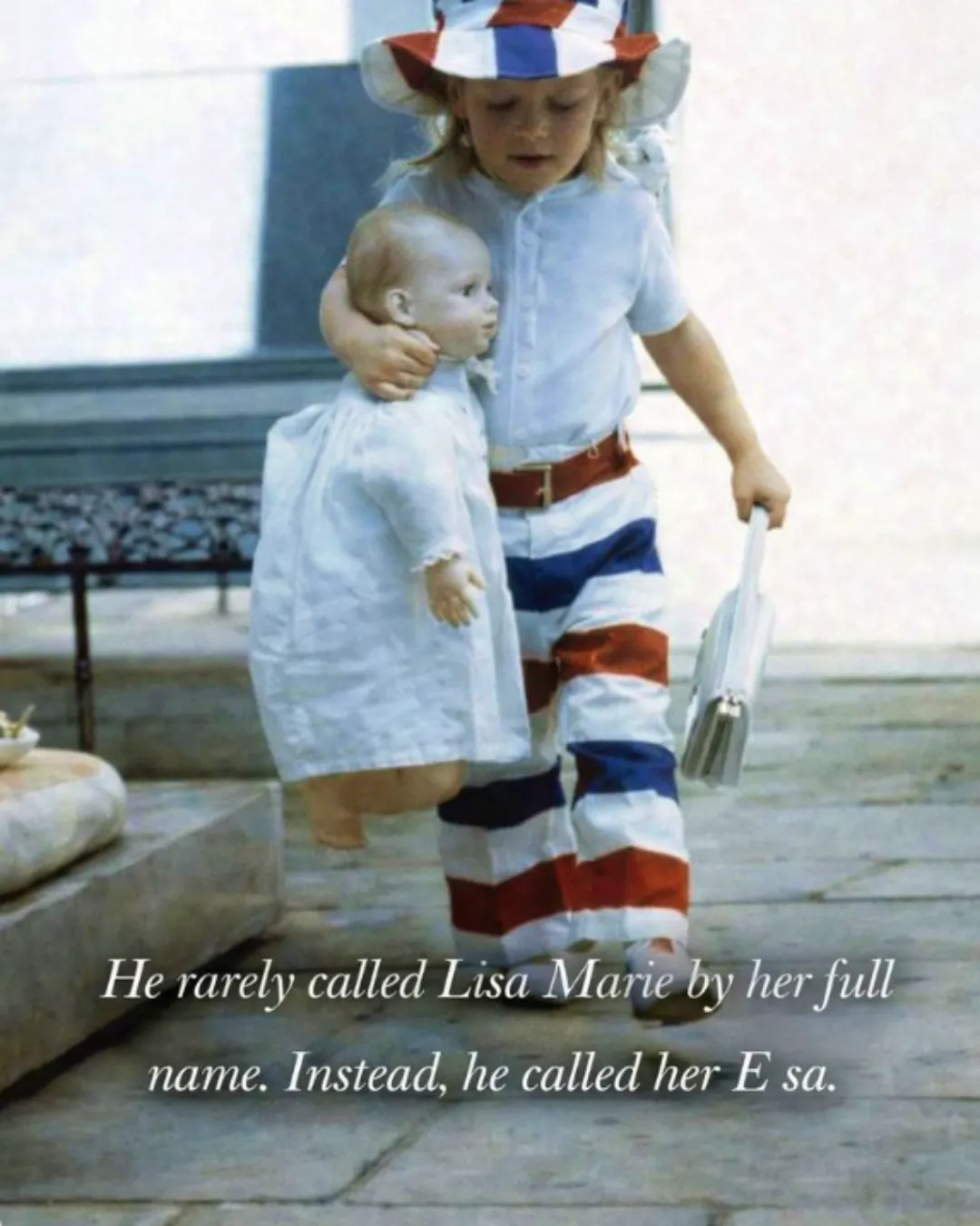
Those closest to Elvis Presley often said that no matter how loud the world became around him, his gentlest self appeared when he was with his daughter. Fame, pressure, expectation—all of it seemed to soften when Lisa Marie entered the room. With her, Elvis was not a legend, an icon, or a performer. He was simply a father, instinctively protective, deeply affectionate, and quietly joyful in a way few ever witnessed.
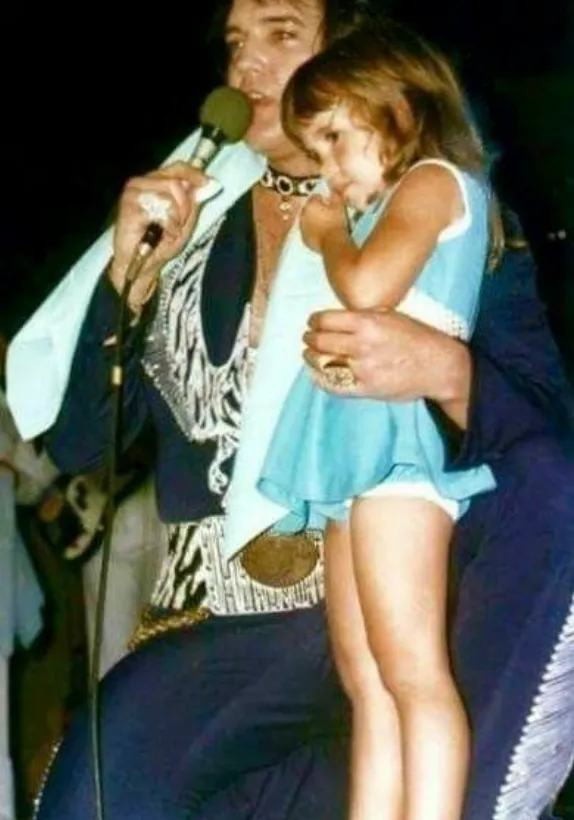
One of the clearest expressions of that tenderness lived in something small and easily overlooked: the name he used for her. Elvis rarely called his daughter by her full name. Instead, he smiled and called her “E sa.” It wasn’t a nickname with a clear origin or clever meaning. It didn’t need one. It belonged only to them, a private sound shaped by love rather than logic. It was the kind of word parents invent without thinking, a language that exists only inside a bond. When Elvis said “E sa,” it carried warmth, safety, and a sense of belonging that no formal name ever could.
In 1972, when Lisa was four years old, Priscilla Presley brought her to visit Elvis at his home. It was an ordinary visit on the surface, but moments like these often revealed more about Elvis than any stage performance. Inside his office den, father and daughter settled into play as if the rest of the world had disappeared. The noise of fame, the constant demands, the expectations—none of it crossed the threshold of that room.
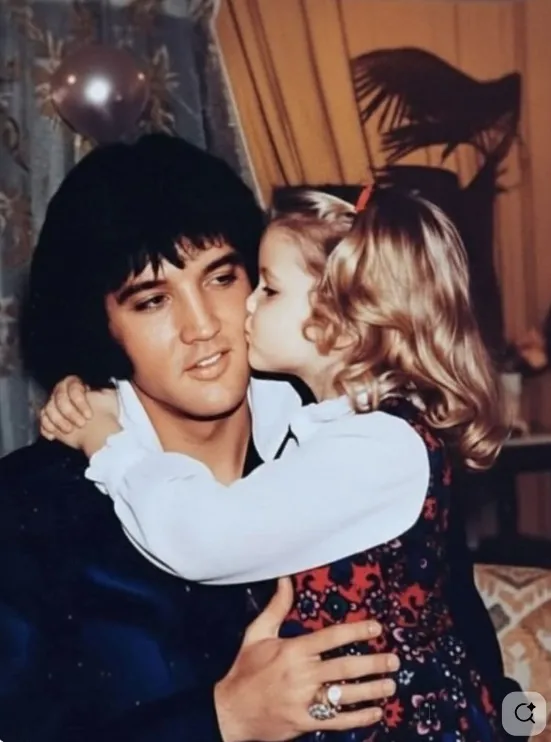
Elvis watched Lisa with open delight. As she ran around, explored corners, and laughed freely, he called out “E sa,” his voice light, amused, and full of affection. Her laughter filled the space, bright and unrestrained. Anyone passing by could feel it instantly—the warmth, the ease, the unmistakable sense that this was where Elvis felt most himself.
Slowly, the room began to change. Pillows ended up on the floor. Furniture shifted. The neat order of the den surrendered to the beautiful mess of childhood energy. It was the kind of chaos adults often rush to control, the kind that usually draws warnings or sharp reminders. But Elvis didn’t correct her. He didn’t raise his voice. He didn’t seem bothered at all.
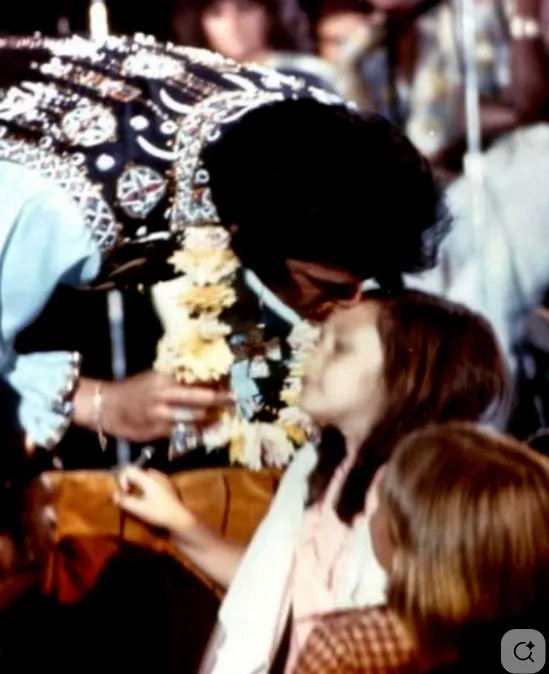
When someone nearby hesitated and asked whether Lisa should be stopped, Elvis only laughed. There was no edge to it, no impatience. He said she was just being a child—and childhood didn’t last forever. The words were simple, but they carried weight. Elvis understood something deeply human: that these moments were fleeting. That the freedom of childhood disappears quietly, and once it’s gone, it never truly returns.
There was a quiet wisdom in his patience. Elvis had lived much of his life under control—controlled schedules, controlled images, controlled expectations. With Lisa, he allowed disorder. He allowed noise. He allowed joy to spill over the edges of the room. In doing so, he gave his daughter something invaluable: permission to simply be.
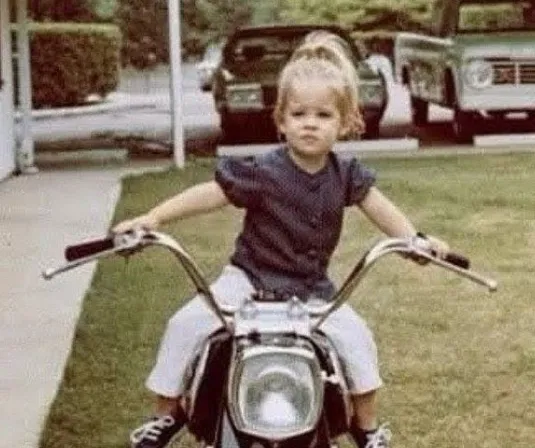
Nearly two hours passed before Priscilla returned. She stepped into the den and took in the scene—the scattered pillows, the moved furniture, the visible signs of play. Instinctively, she began to ask who had allowed such chaos. Elvis tried, unsuccessfully, to keep a straight face. For a brief moment, he pointed elsewhere, pretending innocence, before breaking into laughter.
The room followed. Smiles replaced any tension. The question dissolved into shared amusement. In that instant, fame had no place. Status meant nothing. What remained was something far more real: a father who had chosen presence over order, connection over control.
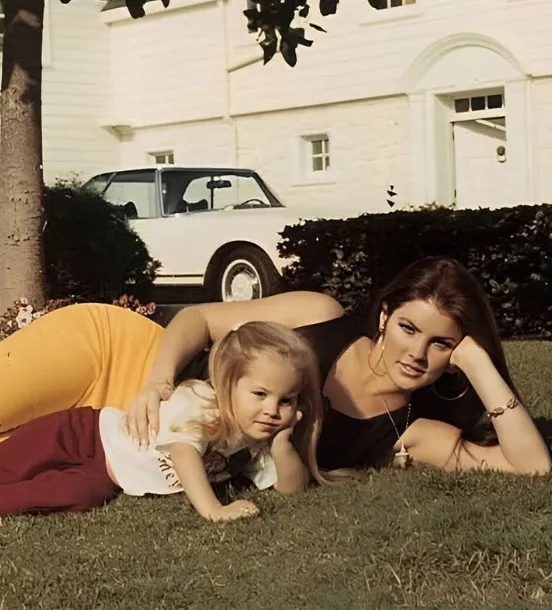
Moments like this explain why those who truly knew Elvis often spoke of him with such affection. Behind the image the world consumed was a man capable of profound softness. With Lisa, he didn’t need to perform. He didn’t need to impress. He didn’t need to prove anything. His love was instinctive, physical, and immediate—shown in laughter, patience, and a willingness to let a room be turned upside down for the sake of a child’s happiness.
The nickname “E sa” captures that essence perfectly. It wasn’t meant for public ears. It wasn’t cute for effect. It was a sound shaped by intimacy, by repetition, by moments shared in private spaces. It was love spoken softly, without explanation. And perhaps that is why it resonates so deeply—it reveals the part of Elvis that existed beyond spectacle.
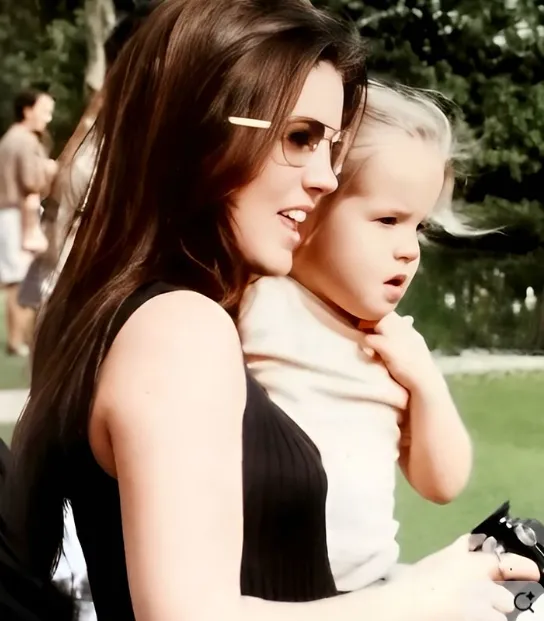
For Lisa Marie, that nickname was a bridge. It connected her to a version of her father the world rarely saw. Long after childhood, long after those rooms and afternoons had passed, “E sa” remained a reminder of being cherished without condition. It held the memory of safety, of laughter echoing in a room where nothing else mattered.
Elvis understood that his life was unusual, that his time was divided and often demanded by forces beyond his control. Yet when he was with his daughter, he anchored himself in something timeless. He knew that records, tours, and applause would fade, but the feeling a child carries from moments like these would last forever.
In hindsight, these small scenes feel especially poignant. They show Elvis not as a tragic figure or an untouchable icon, but as a man who loved deeply and intuitively. A man who knew when to let go. A man who found peace not in perfection, but in presence.
“E sa” was not just a word. It was a window into his heart. It was Elvis Presley at his most human—laughing, patient, unguarded—choosing love over order, memory over control. And in that quiet, playful chaos, he left behind something far more enduring than fame: the unmistakable imprint of a father’s love, spoken softly, meant only for one little girl.