
5. Nearly 50 Voices in One Man: The Miracle Called Elvis Presley
Over the course of his 23-year recording career, Elvis Presley revealed something that very few singers in history have ever possessed. It was not just vocal power, and it was not merely range. It was an almost unbelievable spectrum of expression—a voice capable of becoming many voices, each one emotionally distinct, each one unmistakably real. Trained listeners and vocal scholars have identified nearly fifty different vocal tones across his recordings, stretching from resonant bass depths to fragile, floating falsettos. This extraordinary versatility did not arrive suddenly, nor did it fade with time. It was not confined to one era, one style, or one phase of his life. It existed as a fundamental part of who Elvis was from the very beginning.
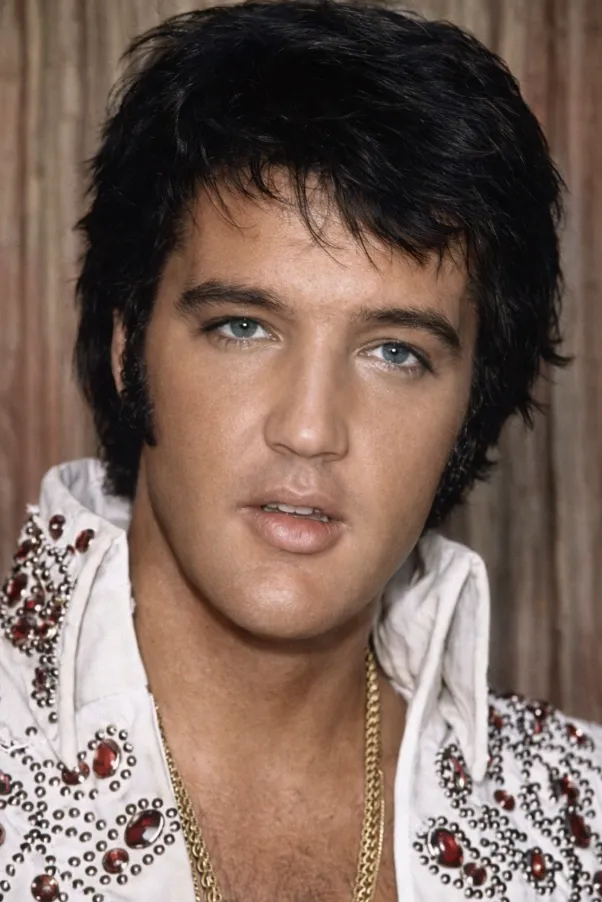
What made Elvis truly exceptional was not simply that he possessed such range, but that he moved through it with an effortlessness that felt almost instinctive. He did not need to change songs, keys, or moods to access different colors in his voice. Sometimes within a single line—sometimes within a single breath—his voice could descend into darkness or lift into light. A phrase might begin with hushed vulnerability and end in unrestrained power, without sounding forced or calculated. These shifts were not technical displays meant to impress. They were emotional responses, guided by feeling rather than design.
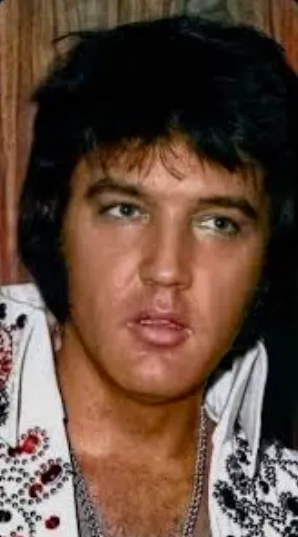
That kind of flexibility came from a rare balance within his voice. Elvis had an intuitive understanding of sound that cannot be taught. He did not approach music intellectually first; he felt it before he shaped it. Emotion led, and technique followed. His control was not rigid but elastic, allowing him to bend notes, soften edges, or sharpen them when the moment demanded it. Whether he was whispering a love song, testifying through gospel, or unleashing raw energy in rock and roll, his voice always sounded connected to something internal and deeply personal.
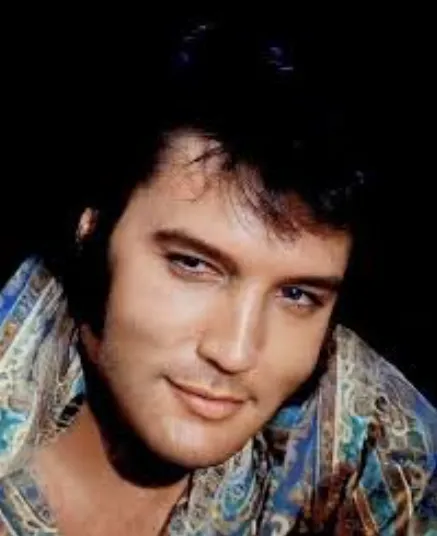
Yet raw talent alone does not explain the full scope of what Elvis achieved. Beneath the surface of his voice lived a quiet restlessness—a need to grow, to search, to reach further than he had before. That hunger never left him. Even at the height of his fame, when repetition would have been easy and profitable, Elvis continued to listen, absorb, and experiment. He studied gospel quartets, learning how voices could blend, swell, and lift toward the heavens. He absorbed the pain and grit of blues singers, understanding how suffering could live inside a single note. From country storytellers, he learned clarity and sincerity. From pop crooners, he learned phrasing, control, and intimacy.
What made this remarkable was that he absorbed these influences without ever losing himself. Elvis did not imitate; he transformed. Each sound passed through his own emotional lens before emerging as something uniquely his. He was never content to simply repeat what had already worked. Each recording session, each performance, became another attempt to go deeper—to uncover something truer, something stronger, something closer to the center of who he was. He chased improvement with the same intensity that he chased meaning, and that pursuit shaped the evolution of his voice over time.
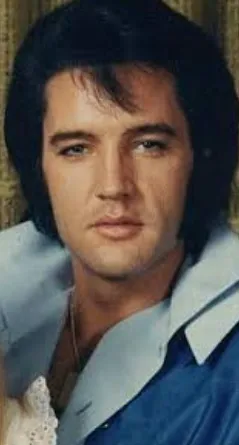
As the years passed, his voice matured, darkened, and gained new weight, but it never lost its flexibility. Even when physical strain and personal struggles entered his life, the emotional intelligence of his voice remained intact. In fact, in many ways, it deepened. There is a lived-in quality to his later recordings, a sense that experience had carved new spaces within his sound. Pain, longing, regret, hope, and resilience all found room to coexist. His voice became not smaller, but more complex—capable of carrying contradictions without breaking.
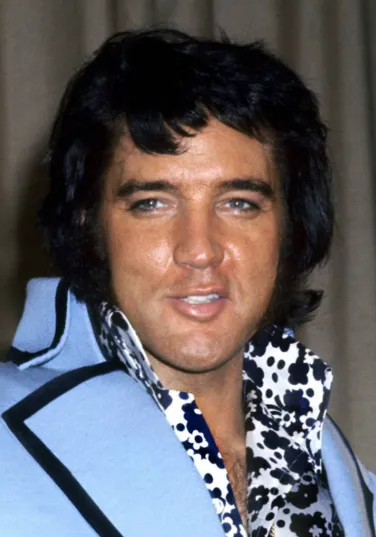
This is why Elvis’s music still feels alive today. He did not offer the world a single, fixed version of himself. He offered many. There was the playful Elvis, teasing the rhythm and bending time for sheer joy. There was the tender Elvis, singing as if he were confiding secrets meant for only one listener. There was the fierce Elvis, driving songs with raw force and urgency. There was the aching Elvis, letting silence and restraint speak louder than volume. Each voice carried a different shade of his inner world, and together they formed something rare: a complete emotional landscape.
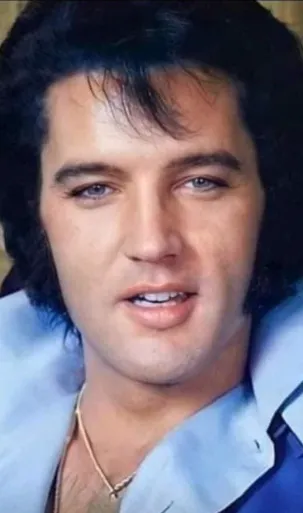
In sharing all of these voices, Elvis became more than a great singer. He became a living archive of human feeling. His recordings do not merely capture songs; they capture states of being. They remind listeners that emotion is not singular or simple, but layered and shifting. Love can be soft and desperate at the same time. Strength can carry vulnerability within it. Joy and sorrow can exist side by side. Elvis did not flatten these experiences into something easy or polished. He honored their complexity by letting his voice reflect it honestly.
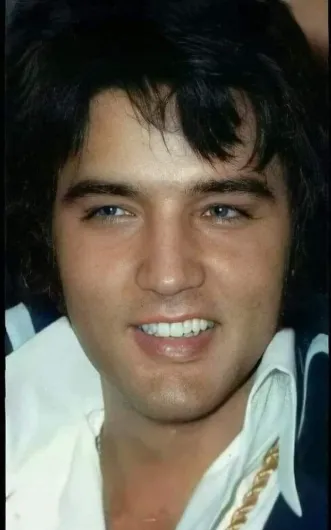
That honesty is what gives his music its timeless quality. It does not belong solely to the era in which it was created. It does not rely on nostalgia to survive. Instead, it continues to resonate because the emotions it carries are permanent. Long after the cultural context has changed, long after styles have evolved, the human heart still recognizes what Elvis expressed. His voice speaks to something fundamental—the need to feel deeply and to be understood without explanation.
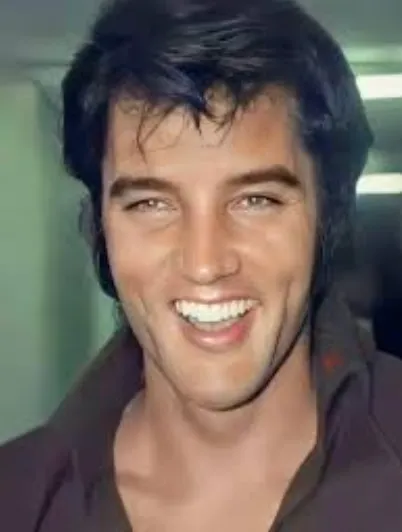
In the end, Elvis Presley’s greatest achievement may not have been how many records he sold or how large his legend grew, but how completely he gave himself through his voice. He held nothing back. He allowed every shade of emotion to surface, trusting that truth would carry its own power. That courage—to be tender, fierce, uncertain, and open all at once—is what continues to draw listeners toward his music.
Elvis did not just sing songs. He revealed what it means to feel. And in doing so, he ensured that his voice would never fade into history, but continue to live—vivid, human, and unmistakably real.
The Sacred Room at Graceland and the Words Elvis Never Got to Say
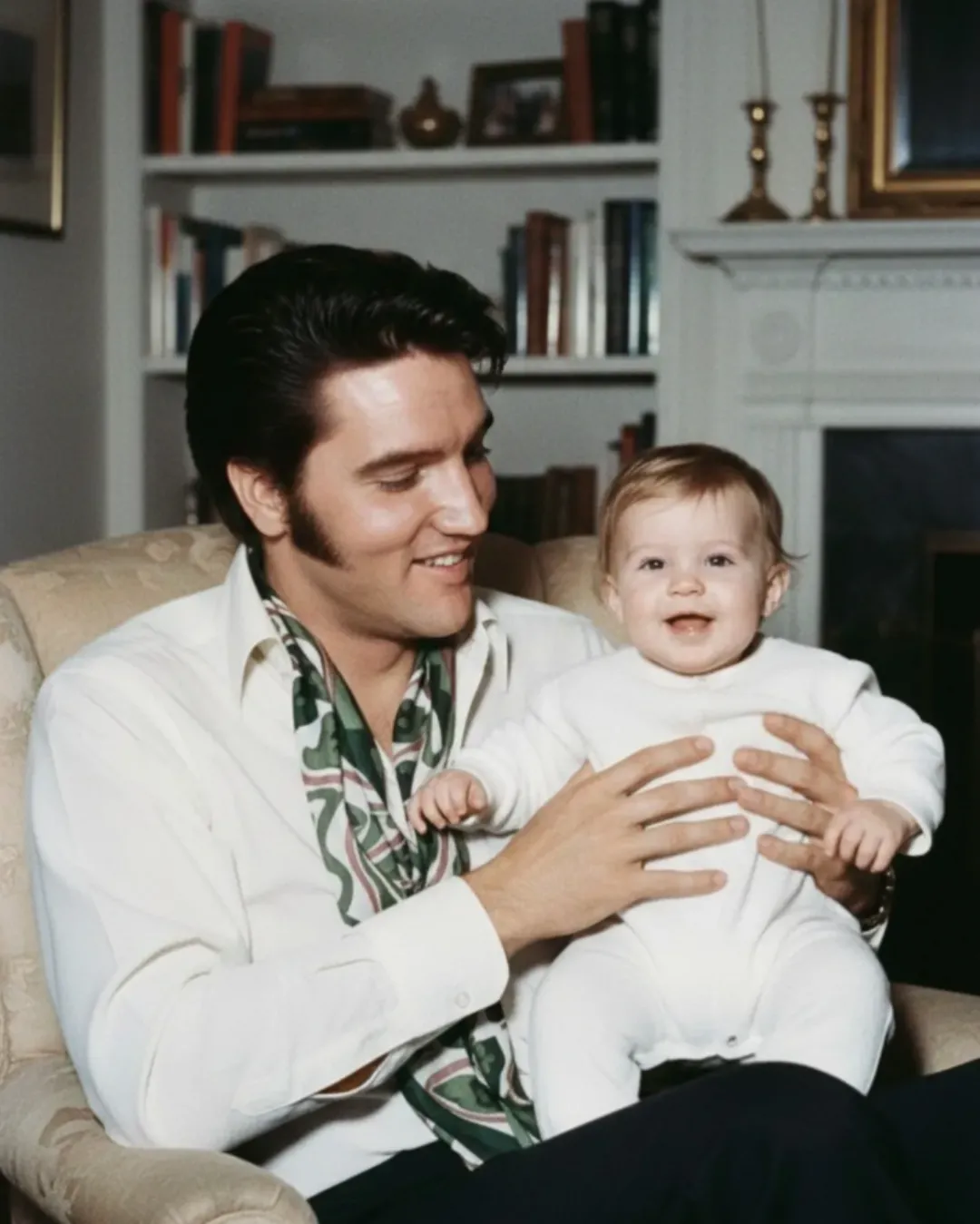
In the quiet outskirts of Graceland, just beyond the main house where millions of fans walk every year, there is a room most will never see. It is not part of the tours, nor does it shine with the polished glamour of Elvis Presley’s stage costumes or gold records. This space is smaller, softer—almost sacred. It holds no spotlight, no velvet ropes. Instead, it holds the simple, fragile pieces of a man who once burned brighter than the sun.
Inside this unassuming archive rest the things Elvis kept close, the things that mattered when the lights were off, when the crowds disappeared, and when he was no longer the King but simply a father. A worn leather wallet, softened by years in his pocket. Little photographs of Lisa Marie pressed into its folds. A tiny white fur coat, purchased lovingly for a little girl he adored beyond measure. And a pale-blue scarf, delicate and timeworn, carrying a handwritten message that had waited decades to be found.
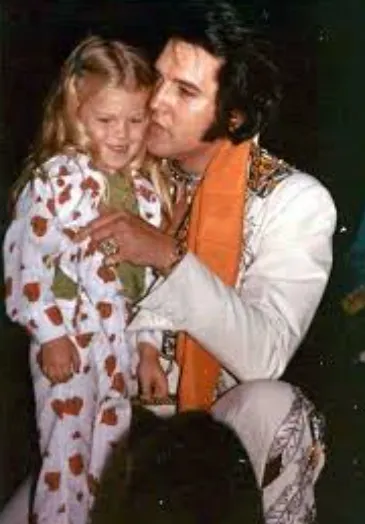
When Lisa Marie discovered that scarf, everything in the room seemed to still. She reached for it gently, as though touching something alive—something that remembered her. Her breath caught; her voice fell to a whisper.
“My God… I’ve never seen that.”
In that moment, she was no longer the heiress of an empire, no longer the child forever linked to a legend. She was simply a daughter stumbling upon a message from her father—one that had somehow survived the years, the grief, the silence, and the vastness of everything that had come between them.
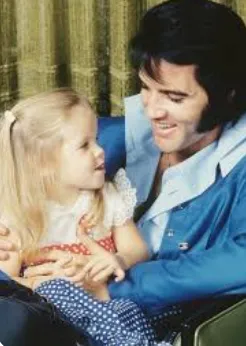
She pressed the scarf to her chest, her eyes shining with a mixture of awe and ache.
“I want it. Can I take it? I’m going to get it framed.”
It was as if a missing piece of her heart had been quietly waiting in that room all along.
But the memories she carried were not all wrapped in tenderness. Behind the fame, behind the glittering suits and roaring crowds, Lisa had seen something more fragile—something the world only understood after it was too late.
“I think he was in trouble. He was not happy,” she once admitted softly, years later, in an interview that revealed more truth than many had been ready to hear.
“He was… crying out for help.”
Millions knew the legend. Only one truly knew the man.
Long before the world pieced together the truth of Elvis’s final years—the suffocating insomnia, the endless prescription medications, the physical pain no one could diagnose, the isolation carved by unimaginable fame—Lisa had already seen signs of a storm gathering around her father.
She remembered the nights most clearly.
Nights when the house felt too quiet.
Nights when footsteps approached her door.
Nights when he appeared in the doorway—not as the icon people screamed for, but as a father who could barely hold himself up.
“There were nights he would come to my room,” she said quietly.
“He would lean against the doorframe, unsteady. And I had to catch him.”
She was only a child. But children often see the truth before adults dare to acknowledge it.
To the world, Elvis Presley was electrifying, unstoppable, larger than life.
To Lisa Marie, he was a man trembling from exhaustion—his body weighed down by pain, his soul burdened by loneliness—and yet still trying to stand tall for the little girl he adored.
It is one thing to lose a father.
It is another to lose a father the world insists on worshiping while privately failing to understand.
For all his records, for all his triumphs, for all the stages he conquered, very few understood the cost behind the curtain. But Lisa did. She knew the man who saved tiny mementos for her, who slipped her pictures into his wallet as if they were talismans, who searched for comfort in her presence when everything else began to crumble.
Love, for Elvis, was always simple. Pure. Uncomplicated.
Fame was everything else.
In that archive room at Graceland, surrounded by things untouched by time, Lisa could finally feel the truth of what her father had tried to leave behind for her. He hadn’t just saved objects. He had saved pieces of himself—pieces he hoped she would one day hold in her hands and understand.
The pale-blue scarf, the tiny coat, the photographs tucked so carefully into his wallet—each one whispered the same message:
You were my heart.
You were my safe place.
You were the one thing that never failed me.
For all that the world claimed to know about Elvis Presley, only Lisa Marie ever saw the complete story: the brilliance, the brokenness, the tenderness, the hope, the desperation, the joy, the pain. She carried the truth in memories both sweet and sorrowful, in flashes of childhood innocence and moments far heavier than any child should endure.
And yet, standing in that quiet archive, she found not sadness, but connection—connection to the man behind the myth, the father behind the icon, the human being behind the legend.
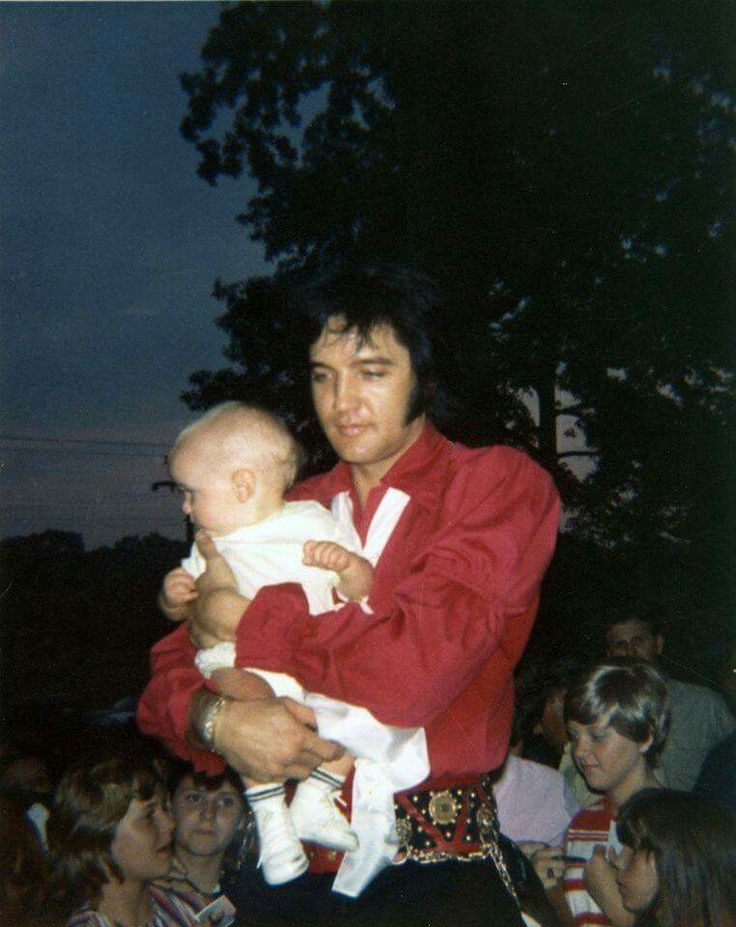
What the world remembers of Elvis is dazzling.
What Lisa found was something deeper:
A father who loved her enough to leave pieces of his heart hidden in the softest corners of Graceland.
A father who, despite the weight of the world, always kept a place for her—a place untouched by fame, by expectations, by the roar of the crowd.
A father who, in the end, wanted her to know that she had been the brightest part of his life.
Inside that room, small and unadorned, the legend faded away.
And what remained was love. Pure, enduring, unspoken—and waiting to be found.