
“Without a Song”: The Night Elvis Presley Spoke From the Heart
On January 16, 1971, Elvis Presley stood in a place few people expected to see him—not under blazing stage lights, not behind a microphone with thousands cheering his name, but behind a podium. There were no sequined jumpsuits, no dramatic gestures, no thunderous applause demanding an encore. Instead, there was a quiet dignity, a thoughtful pause, and a man speaking from the heart.
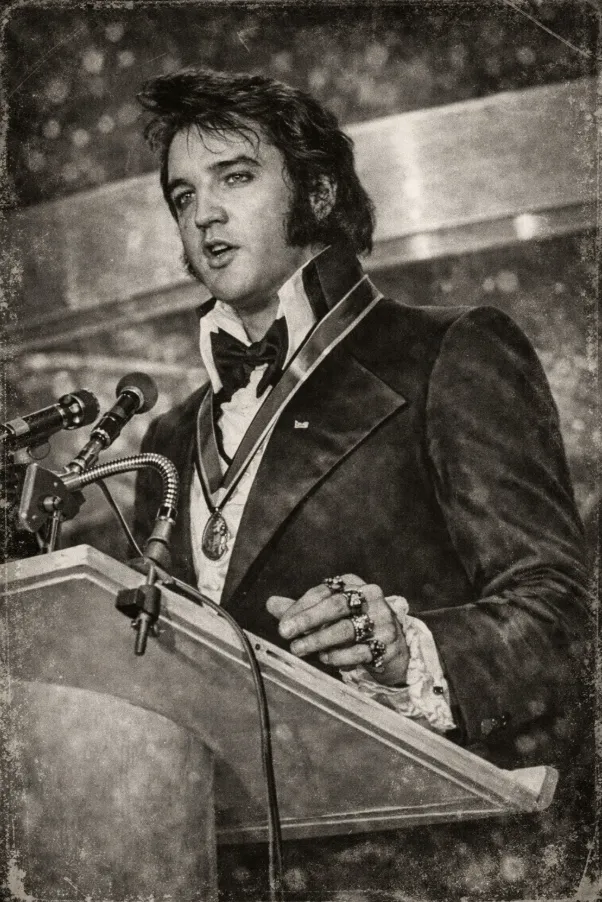
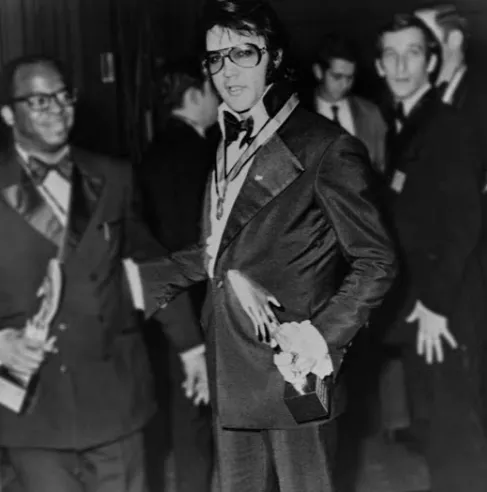
That evening, Elvis accepted the Jaycee Award, having been named one of the “Ten Outstanding Men of the Nation.” It was an honor that recognized far more than his musical success. It acknowledged his character, his influence, and his impact beyond records and performances. Yet what made the moment unforgettable was not the award itself—it was the way Elvis chose to receive it.
He did not speak as “The King of Rock and Roll.”
He spoke as a man.
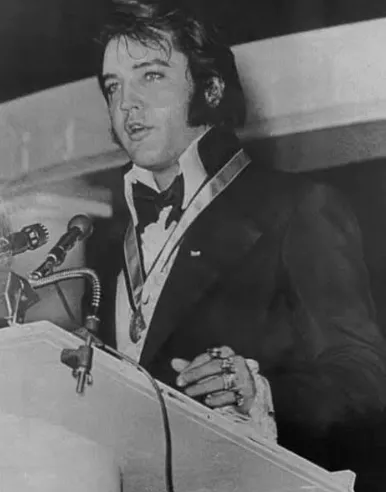
In his acceptance speech, Elvis revealed something rare: his inner world. He quoted words that had guided him since childhood—words that had carried him through loneliness, uncertainty, and moments when fame offered no comfort at all:
“Without a song, the day would never end…
Without a song, a man ain’t got a friend.”
These were not poetic lines chosen for effect. They were a confession. For Elvis Presley, music was never just a career or a path to stardom. It was companionship. It was survival. It was how he made sense of life.
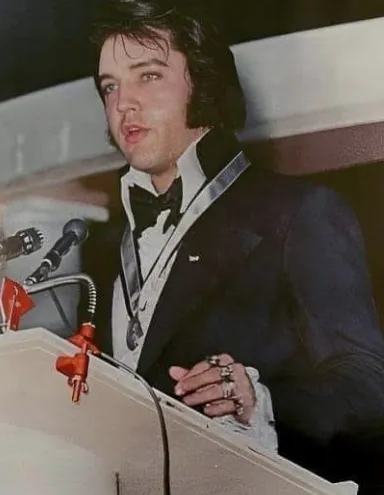
That is what made the moment so powerful. The world knew Elvis as a phenomenon—an icon whose voice could shake arenas and whose presence could electrify generations. But standing at that podium, he stripped away the mythology and spoke honestly about what singing truly meant to him. Music, he explained, had shaped him, guided him, and given him purpose long before it gave him fame.
Elvis grew up in hardship. His childhood was marked by poverty, uncertainty, and emotional closeness within a family that had little material security. In those early years, music became a refuge. Gospel hymns offered spiritual grounding. Blues carried pain and resilience. Country songs told stories of ordinary lives and quiet struggles. Music was always there—faithful, familiar, and deeply personal.
So when Elvis said that “without a song, a man ain’t got a friend,” he wasn’t speaking metaphorically. He was describing lived experience. Music had been his constant companion when the world felt overwhelming or unkind. It had given him comfort before the crowds ever did.
That night in 1971, the audience saw a side of Elvis that rarely made headlines. He spoke with humility, acknowledging his roots and the people who had supported him along the way. He did not claim greatness. He expressed gratitude. He did not frame his life as a triumph of talent alone, but as a journey shaped by faith, discipline, and a deep emotional connection to music.
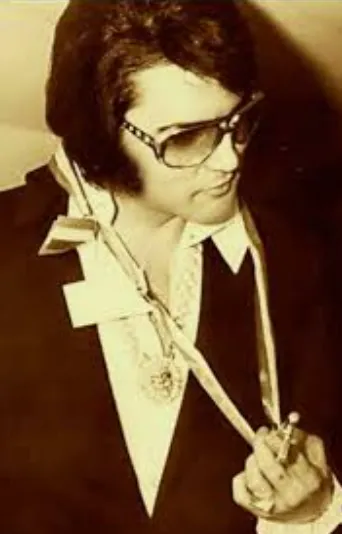
It was a reminder that behind the legend was a man who still felt awe at the life he had been given.
The speech also revealed something essential about Elvis’s relationship with his audience. He never saw music as a one-way performance. To him, singing was an exchange—an act of giving and receiving. He understood that songs could reach places words alone could not. They could comfort the lonely, give voice to hidden emotions, and remind people that they were not alone.
That belief guided him throughout his career.
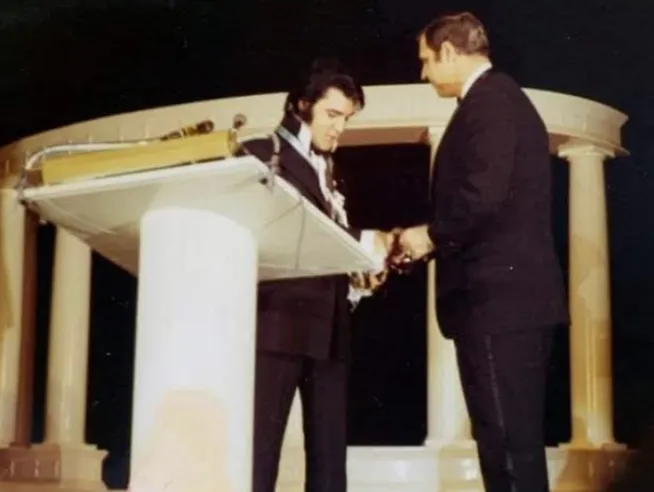
Even at the height of his fame, Elvis carried himself with an awareness of responsibility. He knew that his voice mattered not just because it was powerful, but because it connected people to something human and real. When he sang, he wasn’t chasing applause—he was offering presence.
The Jaycee Award ceremony captured that truth beautifully. It showed Elvis not as an untouchable icon, but as someone deeply aware of his imperfections, his struggles, and the role music played in helping him endure them. He acknowledged that singing was not always easy, but it was always necessary. It was how he stayed grounded in a life that often felt unreal.
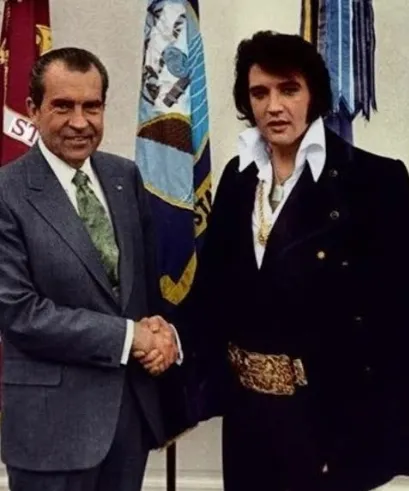
In many ways, that speech was a turning point in how history remembers him. It reminds us that Elvis Presley’s greatness did not come solely from talent or charisma. It came from sincerity. From the fact that he believed in music as a force for connection and healing.
That night, Elvis didn’t simply accept an award.
He left behind a message.
A message that songs matter. That art matters. That even in moments of success, humility has a place. That music can be a lifeline, not just entertainment. And that a song, sung with honesty, can become a friend when nothing else remains.
True to his words, Elvis kept singing his song.
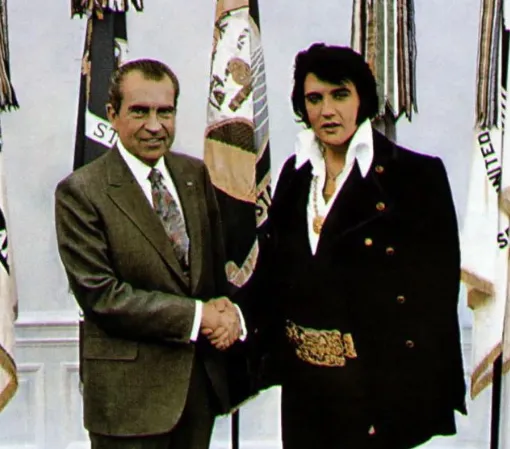
He sang through triumph and exhaustion. Through adoration and isolation. Through joy and pain. Music remained the thread that held him together, even when life pulled hard in different directions. It was the language he trusted most—the one that allowed him to speak when ordinary words failed.
Looking back now, more than half a century later, that quiet moment behind a podium feels as important as any legendary performance. It reminds us that Elvis Presley was not only a cultural force, but a man guided by purpose and gratitude. A man who understood that his voice was a gift meant to be shared, not glorified.
And perhaps that is why his legacy endures.
Because long after the applause fades, the songs remain. And in those songs lives the same truth Elvis spoke that night—that music can carry us through the longest days, give us companionship in solitude, and remind us of who we are.
Without a song, the day would never end.
And thanks to Elvis Presley, the song is still playing.
Elvis Presley: More Than a Legend — A Heart That Will Never Die
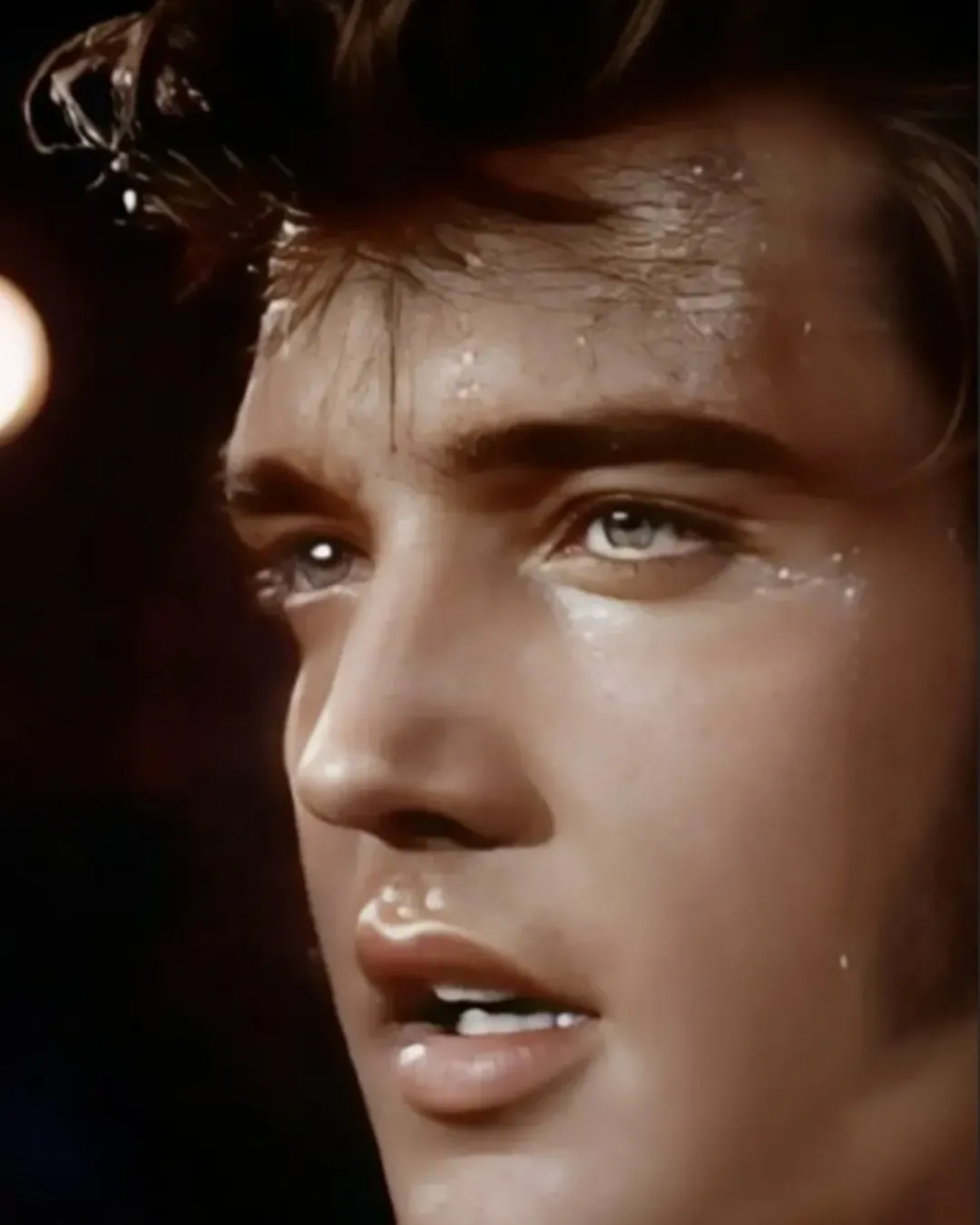
Elvis Presley, seen in profile, was absolute perfection — in fact, he was perfect even from behind. His body was beautiful, his face was beautiful, and every part of him carried a natural elegance that seemed almost unreal. But beyond his physical appearance, Elvis possessed something even more remarkable: a glow that came from the inside, a warmth that touched people before he ever opened his mouth. He was a rare combination of beauty, talent, soul, and humanity.
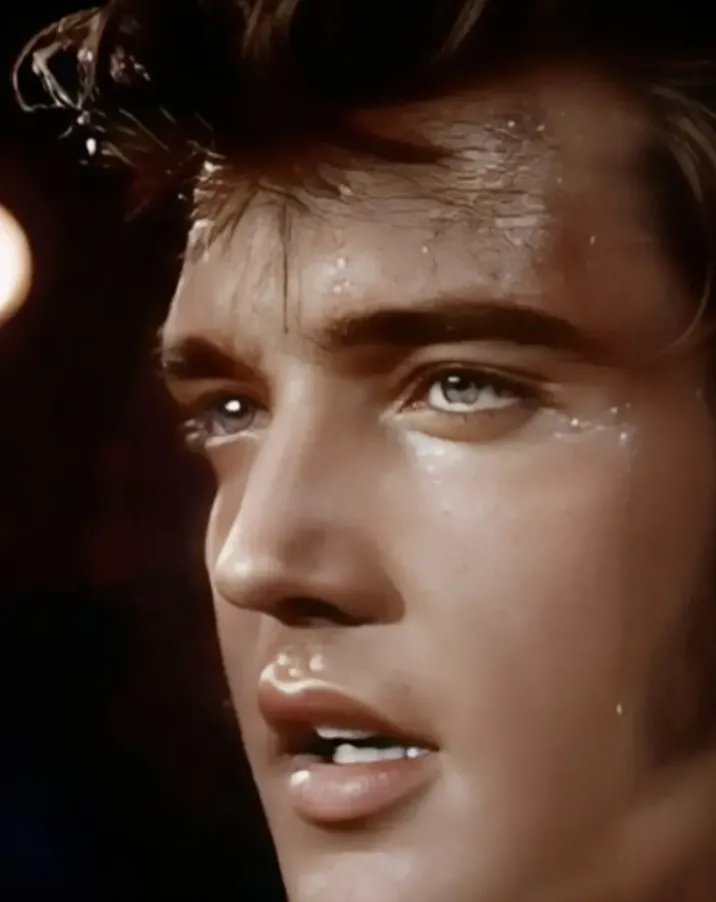
He had an extraordinary empathy for the public and for everyone around him. Elvis had a way of making people feel seen, heard, and valued, even if only for a moment. Many described his presence as something magical — as if there was an invisible thread connecting him to those who admired him. Yet, for Elvis, this was simply who he was. He never put himself on a pedestal. He never called himself “the king,” never encouraged others to do so, and certainly never sought to be treated as someone above anyone else. He was simple, humble, and polite with everyone — with those who knew him, with those who worked for him, with acquaintances, and even with complete strangers.
What many people never witnessed was the depth of Elvis’s generosity. He helped countless individuals, always in silence, always in anonymity. He shared his money not for recognition or gratitude, but because he genuinely wanted to ease the burden of others. Of course, he bought things for himself, for his parents, and for his family, but what brought him the greatest joy was helping people who needed it. It didn’t matter if he knew them or not. Elvis could sense when someone was hurting. He had a unique gift for recognizing when someone needed support, and with his enormous heart and bright soul, he never hesitated to give. Working hard and sharing what he earned was as natural to him as singing.
For this reason, Elvis Presley did not become the greatest artist of all time solely because he had a magnificent voice or because his performances were unlike anything the world had ever seen. He became the greatest because he was present in the darkest moments of so many people’s lives. His talent moved crowds, but his kindness changed lives.
Elvis treated everyone with respect. He carried himself with gentleness, humility, and a sincere desire simply to be happy. Amid the chaos of fame, the noise, the expectations, and the pressure, he searched for peace — a deep inner peace that often felt just out of reach. He wanted to be treated like a human being, just like anyone else. He didn’t want to be seen as different. He didn’t want to be placed on a throne. And he certainly didn’t want to be treated like a distant star.
But his light was too strong to hide. Wherever he went, he lit up the space around him. His smile could brighten an entire room. His eyes held emotions so deep that people remembered them for a lifetime. His outer beauty and inner gentleness blended in a way that left a lasting impression.
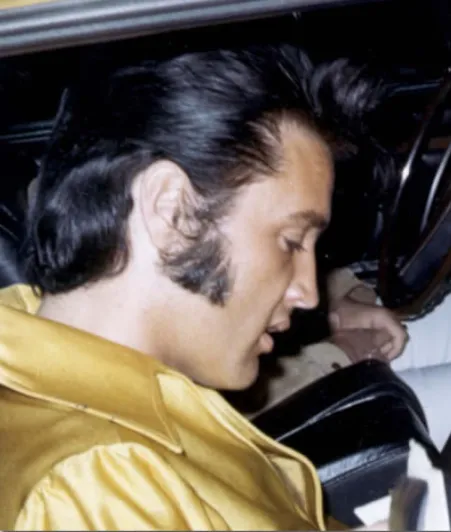
Those who had the privilege of seeing Elvis in person, those who hugged him or kissed him, said the feeling was unlike anything they had ever experienced. He gave off an energy that words fail to describe — a warmth so genuine, so overwhelming, that people felt as if they were lifted into a state of bliss. It was a true feeling, a powerful connection, something pure. And that sincerity mattered deeply.
Elvis will never die. He will always live on — in music, in film, in photographs, in memories, and in the hearts of all who love him. A thousand years may pass, and his name will still be spoken, admired, honored. His legacy will continue to grow, and new fans will discover him, admire him, and keep his flame alive. It is astonishing to realize that one single person was capable of making such an immense difference — not only in entertainment, not only in music or movies, but in the lives of ordinary people. He touched souls, offered hope, and turned pain into strength for many who never even met him.
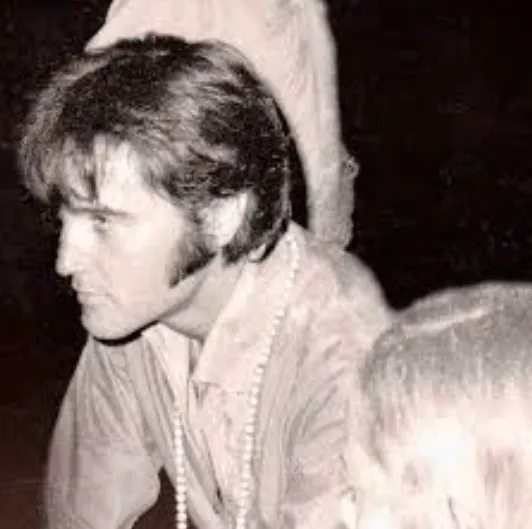
Making a difference is never easy. It demands courage, patience, and sacrifice. But Elvis never stopped. Until the last day of his life, he continued giving, helping, inspiring. Until his final breath, he made a difference.
And because of that, his light will never fade. His story will continue to be told. His presence will continue to be felt. His soul will continue to inspire.
Long live Elvis Presley — today, tomorrow, and forever.